What Is The Difference Between Custom-Made And Prefabricated Orthoses
Summary : Choosing an orthosis is not simply about picking a device from a shelf. The right option depends on the body part being supported, the level of correction required, comfort, daily activities, and individual anatomy. This article explains the difference between custom-made and prefabricated orthoses, how they are designed and fitted, where each option may be useful, and how professional assessment can help guide the decision.
Orthoses are external devices used to support, align, protect, stabilise, or assist parts of the body. They can be designed for the foot, ankle, knee, spine, hand, wrist, and other areas depending on the user's needs. Some are made specifically for one person, while others are manufactured in standard sizes and supplied ready to use.
This is where the difference between custom-made and prefabricated orthoses becomes important. A custom-made orthosis is developed around an individual's anatomy and functional requirements, while a prefabricated orthosis follows a standard design and sizing system. Neither option is automatically suitable for every person. The purpose of the device and the individual's needs should guide the choice.
What Are Custom-Made Orthoses?
Custom-made orthoses are designed and fabricated for a particular individual. The process generally starts with an assessment of the person's condition, anatomy, movement, functional requirements, and intended use of the device.
Depending on the body area and type of orthosis, the practitioner may take measurements, create an impression or cast, or use digital scanning technology. These details are then used to develop an orthosis with the required shape, support, alignment, and control.
Customisation can also involve selecting specific materials, joints, straps, padding, or other components. Once the device is produced, it can be checked during fitting and adjusted where necessary to improve comfort and function.
Individual Fit And Design
One of the main characteristics of a custom-made orthosis is its individual fit. The device is not simply chosen because it matches a standard size. Instead, its dimensions and design are based on the user's anatomy and the clinical purpose of the orthosis.
This can be especially useful when a person has unusual anatomy, significant asymmetry, specific pressure-distribution needs, or functional requirements that are difficult to meet with a standard device.
Personalised Fabrication Process
Custom fabrication usually involves several stages rather than immediate supply. Assessment, design, fabrication, fitting, and follow-up can all form part of the process. This makes it possible to make refinements when required.
Cold Weather Care Tips for Prosthetic Wearers
Cold weather brings unique challenges for prosthetic wearers, from maintaining comfort to ensuring the prosthetic remains functional and safe. Winter conditions like freezing temperatures, icy paths, and dry air can affect both the residual limb and the prosthetic itself. This guide provides practical tips to help prosthetic wearers stay comfortable, safe, and proactive during the colder months.
1. Keep Your Residual Limb Warm and Protected
Cold temperatures can cause the blood vessels in the residual limb to constrict, leading to discomfort, numbness, or reduced circulation.
- Layer Up Smartly: Wear thermal liners, warm socks, or insulated covers over your residual limb. Materials like fleece or wool can help retain heat.
- Avoid Prolonged Exposure: Limit time outdoors in freezing weather to prevent frostbite or skin irritation.
- Use Hand Warmers: Consider placing a safe, gentle heat source, like a hand warmer, near your prosthetic socket (but not in direct contact) to maintain warmth.
How to Prevent Skin Irritation and Sores with Proper Prosthetic Care
Living with a prosthetic limb can help restore mobility and independence, but it also comes with the responsibility of proper care. Without the right maintenance and attention, prosthetic users may experience skin irritation, sores, and discomfort. These issues can lead to infections and affect how well the prosthetic functions, so it's important to take preventive measures.
In this guide, we’ll walk through practical tips and habits that will help you prevent skin irritation and sores while ensuring that your prosthetic stays comfortable and useful in your daily life.
Keep Your Skin Clean and Dry
One of the most important steps in preventing skin irritation is maintaining good hygiene. The skin inside the prosthetic socket is often exposed to sweat, friction, and pressure, making it more vulnerable to irritation.
Wash your residual limb daily with mild soap and lukewarm water to remove sweat, dirt, and bacteria.
After washing, pat the area dry gently with a soft towel. Make sure your skin is completely dry before putting on your prosthetic.
Avoid using hot water as it can dry out the skin, making it more prone to cracks and irritation.
A clean, dry limb helps reduce the risk of developing blisters, rashes, or skin breakdown, which are common issues among prosthetic users.
Choose the Right Socket Liner and Socks
The socket liner and prosthetic socks play a critical role in preventing skin irritation. These materials act as a cushion between your skin and the hard parts of the prosthetic, reducing friction and pressure.
Socket liners: These are worn inside the prosthetic socket to protect your skin. Make sure to choose one made from a breathable, soft material that fits well. A poorly fitting liner can rub against your skin and cause irritation.
Prosthetic socks: Wearing the right sock thickness is essential. Too thin or thick can lead to discomfort and skin issues. Socks help absorb sweat and provide a comfortable fit. Be sure to adjust the thickness of your socks throughout the day, as your limb may swell or shrink slightly.
Make sure your socket liner and socks are clean and in good condition. Replace them if they become worn or if they no longer fit properly.
Check Your Skin Regularly
Performing daily skin checks can help you spot early signs of irritation, blisters, or sores before they become serious problems.
After removing your prosthetic, take a few minutes to inspect your skin. Look for areas of redness, swelling, or tenderness. These may indicate that your prosthetic is causing too much pressure in certain areas.
Use a mirror if needed to check hard-to-see places, or ask a family member to help you.
If you notice any persistent redness, blistering, or sores, contact your prosthetist or healthcare provider as soon as possible.
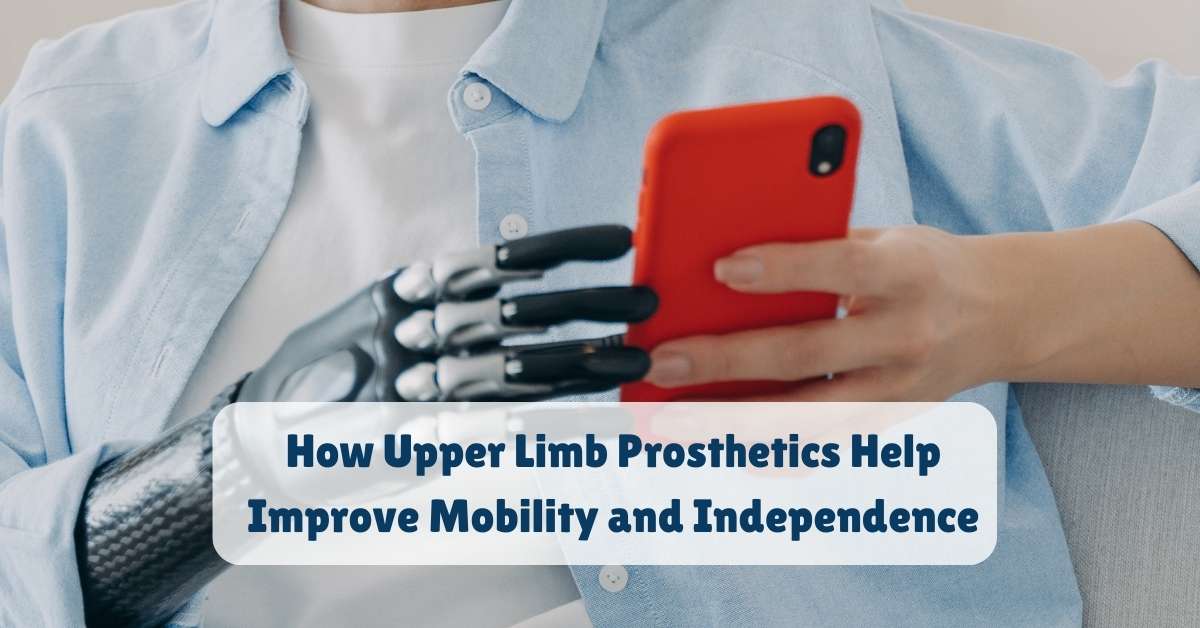
How Upper Limb Prosthetics Help Improve Mobility and Independence
The loss of an upper limb is a life-changing event, affecting a person’s ability to perform even the most basic tasks. For many, this can feel overwhelming, but upper limb prosthetics have made a significant difference in the lives of amputees, offering the possibility of restored mobility and independence. Upper limb prosthetics are not just tools; they are lifelines that help people regain control over their lives, enabling them to do things they may have thought were no longer possible.
Understanding Upper Limb Prosthetics
Upper limb prosthetics are artificial devices designed to replace the function and appearance of a person’s arm or hand. These devices range from basic, non-functional cosmetic limbs to highly advanced prosthetics that can mimic the natural movement of a real hand or arm. Depending on the level of amputation and the needs of the individual, a prosthetic limb can be customized to offer varying levels of mobility, dexterity, and strength.
There are several types of upper limb prosthetics, including:
- Passive Prosthetics: These are primarily for cosmetic purposes and do not have any functional movement. They help restore appearance but are not designed for active use.
- Body-Powered Prosthetics: These use cables and harnesses connected to other parts of the body, like the shoulders, to move the artificial limb.
- Myoelectric Prosthetics: These are powered by electrical signals generated by the user’s muscles. When the user contracts certain muscles, sensors detect the movement and control the prosthetic accordingly.
- Hybrid Prosthetics: These combine body-powered and myoelectric elements for more versatility and control.
How Prosthetics Improve Mobility?
Restoring Function
The most obvious way upper limb prosthetics improve mobility is by restoring function to the affected area. When someone loses an arm or hand, simple tasks such as picking up a cup of water, turning a doorknob, or holding a pen become incredibly difficult, if not impossible.
With the help of an upper limb prosthetic, these basic tasks can once again be performed. Prosthetic arms and hands are designed to replicate the movements of a natural limb as closely as possible, allowing users to regain a wide range of motion.
For example, a myoelectric hand can open and close, grip objects, and even perform more precise movements like typing on a keyboard or holding utensils. Over time, users can train their muscles to control the prosthetic, making these movements feel more natural and seamless.
Increasing Range of Motion
For those with amputations above the elbow or shoulder, upper limb prosthetics can significantly increase their range of motion. While losing a limb severely limits the body's movement, a prosthetic arm can allow for improved shoulder, elbow, and wrist mobility. Some advanced prosthetics even allow for multi-axis movements, which means the limb can move in different directions, much like a natural arm.
Having a prosthetic with multiple joints can greatly improve a person’s ability to carry out daily tasks, such as lifting objects, reaching out to grab something, or performing work-related activities that require a full range of motion.
Helping with Balance and Posture
It’s easy to forget that losing an arm or hand can also affect balance and posture. Without the weight and presence of a limb, the body can become unbalanced, leading to poor posture and discomfort. This imbalance can also make walking and other physical activities more difficult.
A well-fitted upper limb prosthetic helps to restore the body’s balance. By replacing the lost limb with a prosthetic, individuals can improve their posture and distribute weight more evenly. This allows for easier movement and reduces the strain on other parts of the body, such as the lower back, hips, and shoulders.
Supporting Bilateral Activities
Certain activities require the use of both hands, such as tying shoes, folding laundry, or carrying groceries. When one limb is missing, these bilateral activities become much more challenging. Upper limb prosthetics give users the ability to once again perform these tasks by providing a functional second limb.
With a prosthetic hand or arm, people can engage in two-handed activities, making daily chores and personal care much more manageable. Whether it’s driving, dressing, or preparing food, having two working hands—one natural, one prosthetic—gives individuals more control over their daily lives.
How Prosthetics Help with Independence?
Regaining Control Over Daily Activities
One of the biggest emotional challenges faced by amputees is the feeling of dependency on others for tasks they once handled on their own. From getting dressed to cooking, many daily activities require the use of both hands, and the loss of a limb can make these tasks difficult or impossible to perform alone.
Upper limb prosthetics provide the ability to regain control over these activities. Whether it’s brushing teeth, buttoning a shirt, or holding a phone, a prosthetic hand or arm allows users to do more independently. This restoration of self-sufficiency is crucial for mental and emotional well-being, as it empowers individuals to feel capable and confident in their abilities.
Reintegrating into the Workforce
For many people, the ability to work is tied to their sense of independence. Losing a limb can create obstacles to performing work tasks, especially in jobs that require manual labor, typing, or other physical activities. Upper limb prosthetics can make it possible for individuals to return to work and perform their job duties more efficiently.
Whether someone works in an office, construction, or any other field, the use of a prosthetic limb can help them regain their professional independence. Modern prosthetics are designed to be highly functional and adaptable, allowing users to perform a wide range of tasks that might otherwise be difficult or impossible.
Participating in Hobbies and Social Activities
Beyond work and daily tasks, independence also means being able to participate in the hobbies and activities that bring joy and fulfillment. Many people with upper limb prosthetics are able to return to activities they enjoyed before their amputation, whether it’s sports, playing a musical instrument, painting, or gardening.
With the help of specialized prosthetic attachments, individuals can even participate in high-impact sports like cycling, skiing, or rock climbing. The ability to continue enjoying life’s pleasures, without the limitations imposed by a missing limb, is a powerful way to regain a sense of independence.
Boosting Self-Confidence
Independence is closely tied to self-esteem and confidence. The ability to take care of oneself and live independently can significantly improve mental health and overall quality of life. Upper limb prosthetics help boost self-confidence by allowing people to engage in social activities, work, and personal care without feeling reliant on others.
For many amputees, wearing a prosthetic also helps them feel more comfortable in public, as it reduces the sense of being "different" or "incomplete." This can lead to a more positive self-image and greater emotional well-being.
Challenges and Adjustments
While upper limb prosthetics offer incredible benefits, they are not without challenges. It can take time to adjust to wearing and using a prosthetic, especially for those who have lost a limb later in life. Physical therapy, occupational therapy, and regular training are often necessary to help users get the most out of their prosthetic device.
There may also be periods of discomfort or frustration, particularly in the early stages of using a prosthetic. However, with patience and the right support, most people find that the benefits far outweigh the challenges.
The Psychological and Emotional Impact
For many people, the physical benefits of upper limb prosthetics go hand-in-hand with emotional healing. Losing a limb can cause feelings of grief, loss, and isolation. The use of a prosthetic limb not only helps to restore physical abilities but also supports emotional recovery. Regaining the ability to perform tasks independently can greatly improve an individual's self-esteem and overall mental health.
The process of adapting to a prosthetic also builds resilience and confidence. Every milestone—whether it’s mastering a simple task like writing or performing more complex activities—contributes to a sense of achievement and personal empowerment.
Community and Support Networks
Many people with upper limb prosthetics find comfort in joining support groups or communities of other prosthetic users. These groups provide an opportunity to share experiences, learn new techniques for using prosthetics, and find emotional support from those who truly understand the journey. These networks can be both local and online, offering a valuable resource for new amputees who are adjusting to life with a prosthetic limb.
Conclusion
Upper limb prosthetics play a important role in helping individuals regain mobility and independence after the loss of an arm or hand. By restoring function, improving range of motion, and providing support for daily activities, these devices enable people to live fuller, more active lives. While adjusting to a prosthetic can be challenging, the ability to regain control over one’s life and independence is invaluable.
As technology continues to advance, prosthetic devices will only become more functional, adaptable, and lifelike, offering even greater opportunities for amputees to thrive in their personal and professional lives.
At Proactive Technical Orthopaedics, top prosthetic manufacturer in India, we understand the importance of finding the right prosthetic solution tailored to your unique needs. Our dedicated team of experts is here to guide you every step of the way, Contact today to schedule a consultation.
If you’re unsure about what’s best for you, consult with your healthcare provider or prosthetist. They can provide guidance tailored to your situation, helping you find the right balance between comfort, safety, and the health of your residual limb.
At Proactive Technical Orthopaedics, we understand the importance of finding the right prosthetic solution tailored to your unique needs. Our dedicated team of experts is here to guide you every step of the way, Contact today to schedule a consultation.
Always consult with a qualified healthcare provider or prosthetist regarding any concerns or questions about your prosthetic limb and its usage. Individual needs and circumstances may vary, and a healthcare professional can provide personalized guidance tailored to your specific situation.
Cleaning: Follow the manufacturer's guidelines for cleaning and caring for your prosthetic. Generally, you should clean your prosthetic regularly using mild soap and water. Avoid harsh chemicals that could damage the materials. Pay special attention to areas that come into contact with your skin to prevent irritation and infection.
Component Checks: Regularly inspect specific components such as the socket, liner, and joints. Ensure that all parts are functioning correctly and that the prosthetic fits snugly but comfortably. If you notice any discomfort or unusual movement, consult your prosthetist.
Routine Checkups: Schedule routine checkups with your prosthetist. These visits allow for professional assessments of your prosthetic's condition and can provide necessary adjustments or repairs. Regular consultations are particularly important if there are changes in your residual limb due to weight fluctuations or physical activity.
Finding the Perfect Prosthetic Fit for You
Choosing the right prosthetic based on your activity level is an important step in enhancing your mobility and quality of life. By understanding the types of prosthetics available, assessing your activity level, and considering important factors such as comfort, functionality, and durability, you can make an informed decision that aligns with your lifestyle.
Whether you lead a sedentary life, enjoy moderate activities, or are an athlete, there’s a prosthetic designed to meet your needs. Consulting with professionals and trying out different options will help you find the perfect fit for your journey toward improved mobility and independence. Remember, the right prosthetic can open new doors and empower you to lead an active, fulfilling life.
At Proactive Technical Orthopaedics, we understand the importance of finding the right prosthetic solution tailored to your unique needs. Our dedicated team of experts is here to guide you every step of the way, Contact today to schedule a consultation.
Always consult with a qualified healthcare provider or prosthetist regarding any concerns or questions about your prosthetic limb and its usage. Individual needs and circumstances may vary, and a healthcare professional can provide personalized guidance tailored to your specific situation.
Contact your prosthetist if you notice any changes in the way your prosthetic feels, such as increased pressure, rubbing, or discomfort.
By paying attention to your body’s signals and acting early, you can prevent irritation and sores from developing.
Prioritize Your Comfort and Health
Preventing skin irritation and sores with proper prosthetic care is essential for your comfort and overall well-being. By keeping your skin clean, ensuring a proper fit, and regularly checking for signs of irritation, you can avoid common issues and enjoy a smoother experience with your prosthetic.
Remember, it’s important to stay in regular contact with your prosthetist, who can help adjust your prosthetic to ensure it remains comfortable as your body changes. With a little extra care and attention, you can protect your skin, stay comfortable, and focus on living life to the fullest with your prosthetic.
Always consult with a qualified healthcare provider or prosthetist regarding any concerns or questions about your prosthetic limb and its usage. Individual needs and circumstances may vary, and a healthcare professional can provide personalized guidance tailored to your specific situation.
Adjusting your prosthetic limb is a normal part of living with one, and recognizing the signs early can save you from unnecessary discomfort or reduced mobility. Pay attention to your body and your prosthetic to ensure they work together seamlessly. By addressing these issues promptly and maintaining regular contact with your prosthetist, you can continue to enjoy a comfortable, active, and independent lifestyle.
Always consult with a qualified healthcare provider or prosthetist regarding any concerns or questions about your prosthetic limb and its usage. Individual needs and circumstances may vary, and a healthcare professional can provide personalized guidance tailored to your specific situation.
Looking for a dependable orthotic components supplier in India for your specific requirements? Contact us today to discuss your application, product needs, and fabrication requirements with our team. Let’s work together to support better orthotic solutions from the very first component.
Frequently Asked Questions
What Is The Main Difference Between Custom-Made And Prefabricated Orthoses?
Custom-made orthoses are designed and fabricated for an individual using their measurements, anatomy, and functional requirements. Prefabricated orthoses are manufactured in standard designs and sizes and are selected from available options based on the user's needs.
Are Prefabricated Orthoses Effective?
Yes, prefabricated orthoses can be effective when their design, size, and support characteristics are appropriate for the person's condition and intended use. Their effectiveness depends on the individual application rather than simply being labelled as prefabricated.
Are Custom-Made Orthoses Always Better?
No. Custom-made orthoses are not automatically better for every user or condition. Research in areas such as plantar heel pain has not consistently demonstrated a clear advantage of custom foot orthoses over prefabricated alternatives for all outcomes.
How Are Custom Orthoses Made?
Custom orthoses are usually developed after an individual assessment. Depending on the device, the process may involve measurements, casting, impressions, or digital scanning, followed by design, fabrication, fitting, and adjustments.
Who Can Help Select The Right Orthosis?
A qualified orthotic professional or appropriate healthcare professional can assess the person's condition, anatomy, movement, activity requirements, and intended use before recommending a suitable orthotic solution.