Summary : Flat feet can look different from one person to another, and they do not always require treatment. This article explains what flat feet are, how orthoses can support the feet, when they may be helpful for children and adults, the difference between custom and prefabricated options, and what people should realistically expect from orthotic treatment.
Flat feet, also called pes planus, occur when the arch along the inner side of the foot appears lowered or comes closer to the ground when standing. They are common in children, and many people can have flat feet without experiencing pain or difficulty with everyday activities. Treatment is generally considered when symptoms or functional problems are present rather than simply because the arch looks low.
Orthoses are devices worn inside footwear to provide support and influence how the foot bears weight during standing and movement. For someone with symptomatic flat feet, an appropriately selected orthosis may help with comfort, pressure distribution and certain aspects of foot function. However, orthoses should not automatically be viewed as a way to permanently reshape the foot.
What Are Flat Feet And Why Do They Need Management?
A normal foot has an arch that helps distribute forces and support the body during movement. With flat feet, the medial longitudinal arch appears reduced, and the heel or forefoot may also adopt a different position during weight-bearing.
Flat feet can be broadly described as flexible or rigid. In flexible flat feet, an arch may become visible when the foot is not bearing weight or when the person rises onto their toes. Rigid flat feet remain flatter and may be associated with a more significant structural problem.
In children, flexible flat feet are common during development, and a considerable number of cases are painless. Research reviews indicate that only a minority of children’s flat feet cause pain or restrict gait. Management becomes more relevant when a person experiences foot pain, unusual fatigue, difficulty walking, reduced activity tolerance or other functional concerns.
Flat feet can vary in severity and presentation, so understanding the condition is an important first step before deciding whether any treatment is needed. This guide to understanding flat feet can help explain the common types, symptoms and factors that may affect foot function.
How Do Orthoses Help Manage Flat Feet?
Orthoses are designed to interact with the foot and footwear while the person stands and moves. Their purpose is not simply to make the arch appear higher.
Supporting The Foot Arch
An orthosis can provide a supporting surface beneath the foot, particularly around the medial arch. This may help the foot feel more supported during standing and walking.
Redistributing Pressure
The design of an orthosis can affect how force is distributed across the sole of the foot. Instead of concentrating pressure in particular areas, support may help spread the load more comfortably during daily activities.
Influencing Foot And Ankle Movement
Foot orthoses can alter the way forces act on the foot and lower limb. Research in adults with flexible flat feet has found measurable effects on aspects of foot movement and physical function, although the overall quality of evidence has varied.
Helping With Symptoms
For people who have painful or symptomatic flat feet, orthoses may be used as part of conservative management to improve comfort and activity tolerance. The response can vary considerably from one person to another, which is why assessment and appropriate fitting matter.
How Can Orthoses Help Children With Flat Feet?
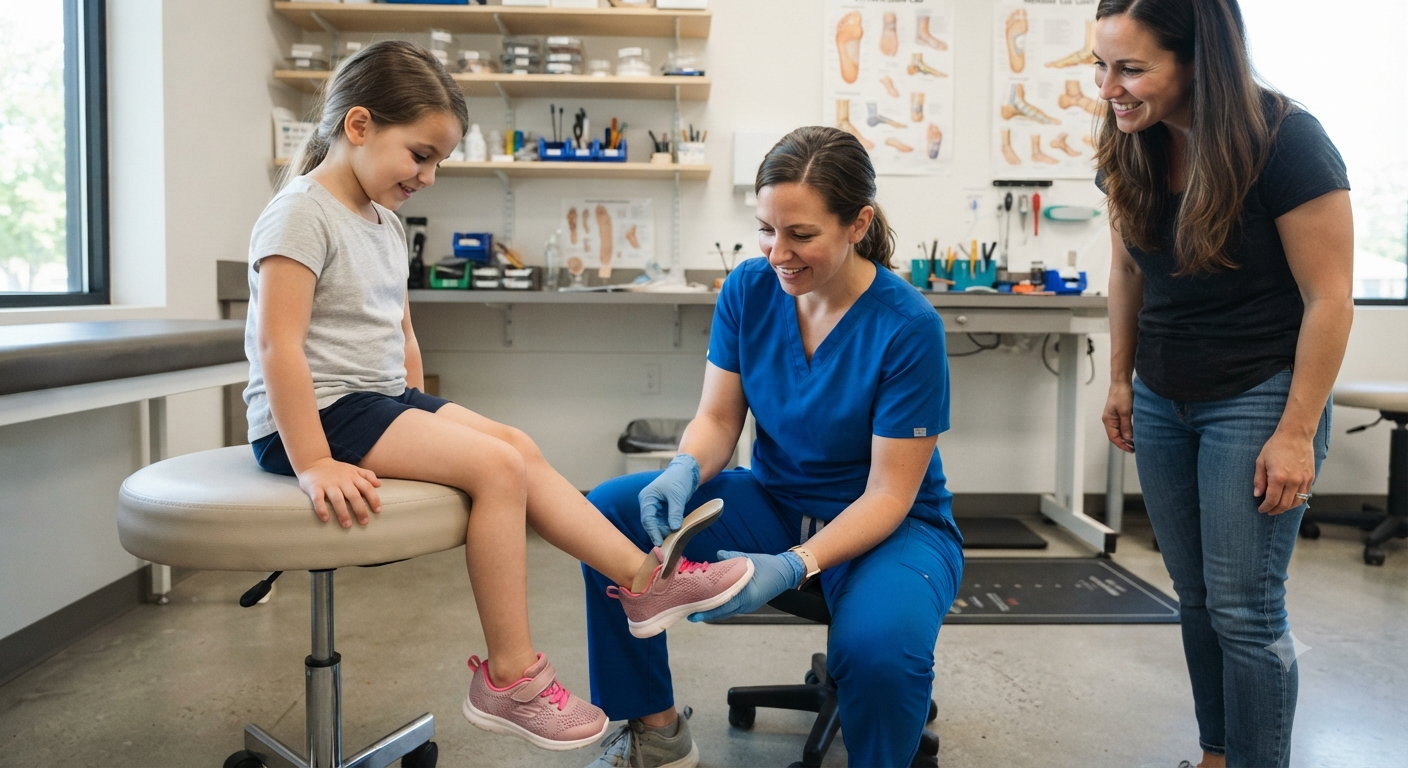
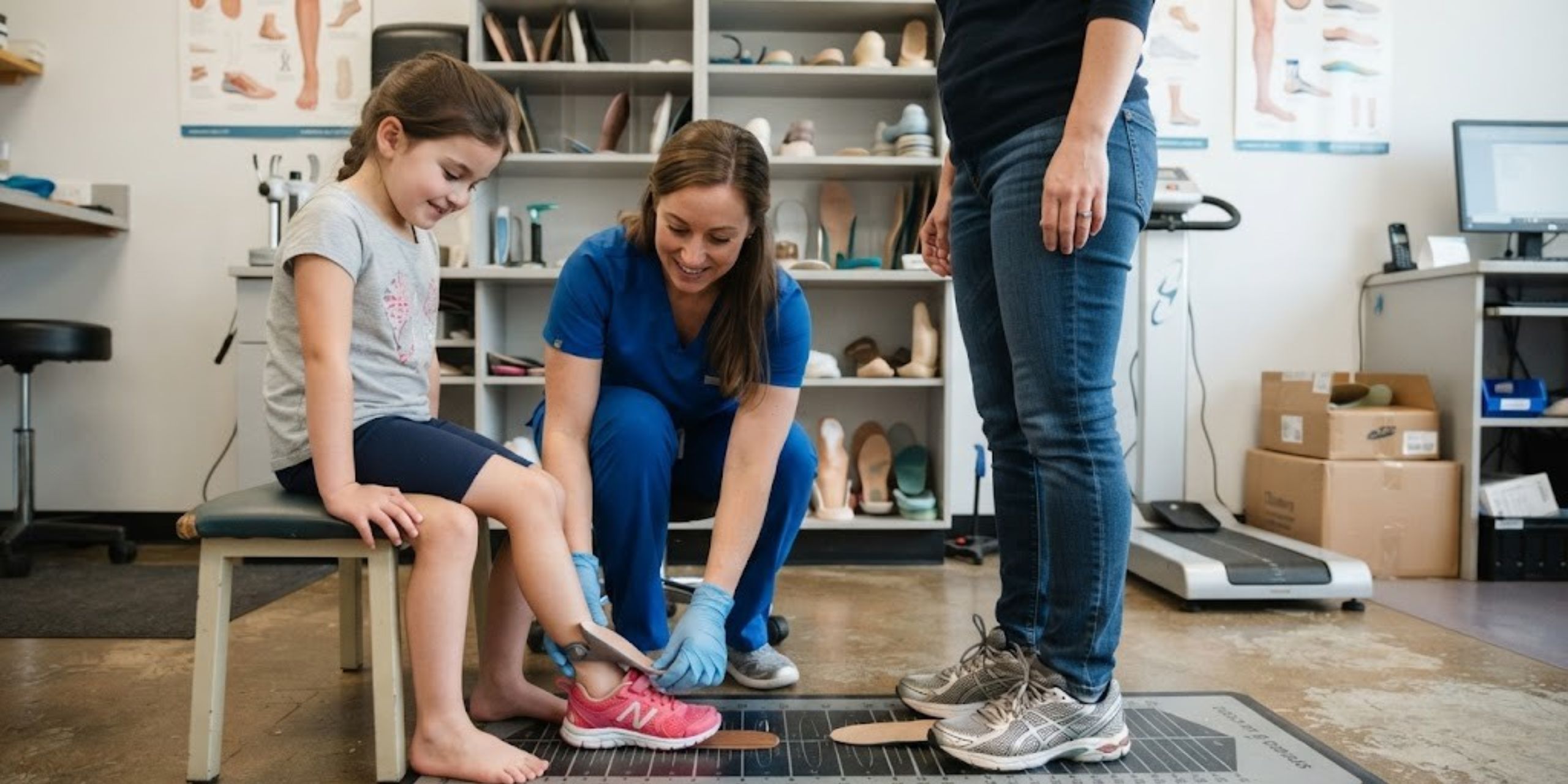
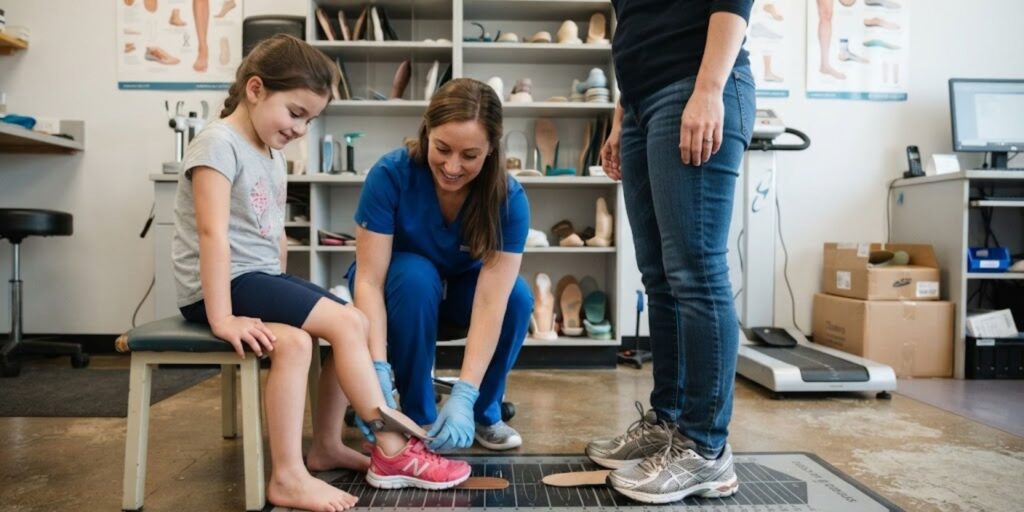
Children’s feet continue to develop, so flat feet should be considered in relation to age, symptoms and overall foot function. When a child has painful or symptomatic flat feet, properly selected orthotic support may be considered as part of conservative care. More information about orthoses for children with flat feet can help parents understand when these devices may be appropriate and what they are intended to achieve.
Many children with flexible, painless flat feet do not need orthoses. Evidence reviews have found limited or low-certainty evidence for routinely prescribing orthoses to children who have asymptomatic flat feet.
Orthoses may have a role when a child experiences symptoms such as:
- Foot or heel discomfort
- Tired feet after activity
- Difficulty participating in sports
- Walking discomfort
- Functional limitations linked to foot posture
A recent systematic review and meta-analysis also found that some radiological measures improved in older children with flexible flat feet following orthotic intervention. However, these findings do not mean that every child will experience the same structural change or that orthoses are necessary for painless flat feet. Parents should therefore focus on symptoms and function rather than appearance alone.
How Can Orthoses Help Adults With Flat Feet?
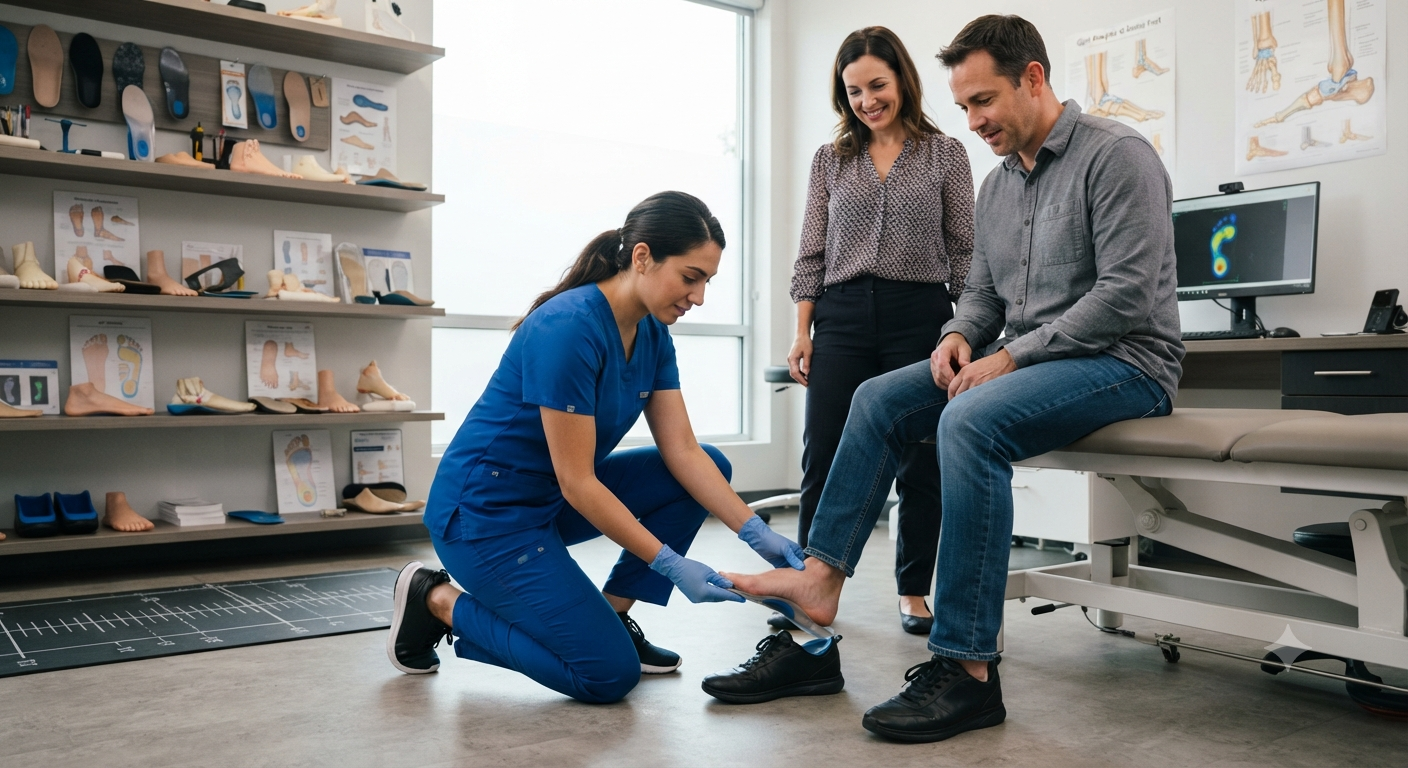
Adults may have flat feet for many years without symptoms, while others may develop discomfort as their activity levels, body weight, footwear habits or musculoskeletal condition change. For symptomatic adults, orthoses may provide support during standing, walking and exercise. They may be used to influence loading patterns and improve functional comfort, particularly when combined with other conservative measures.
Research on adult flat feet has produced mixed findings. Systematic reviews have identified changes in foot mechanics and physical function with some orthotic designs, but the available evidence is not strong enough to claim that one orthosis works for everyone. That is why an orthosis should be selected according to the individual’s symptoms, foot structure, footwear and daily activities.
What Types Of Orthoses Can Be Used For Flat Feet?
The choice between custom and prefabricated orthoses should not be based on the assumption that one option is automatically better.
Prefabricated Orthoses
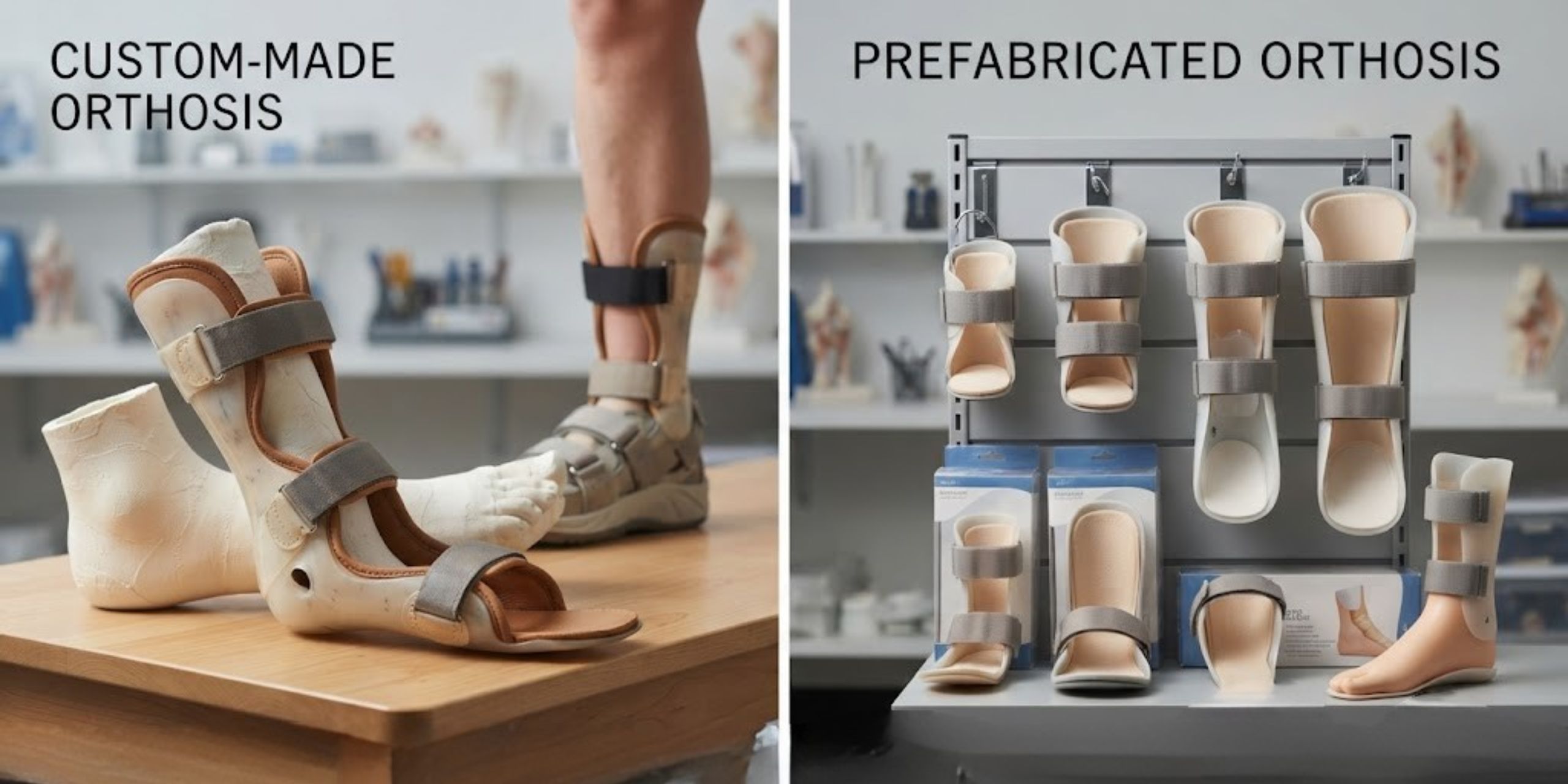
Prefabricated orthoses are ready-made devices available in standard shapes and sizes. They can be useful when straightforward support is needed and may provide a practical starting point for some patients.
Custom-Made Orthoses
Custom orthoses are produced according to an individual’s foot characteristics and specific clinical requirements. They may be considered when a person has unusual foot structure, particular pressure areas or a need for more individualised support.
The difference between custom and prefabricated orthoses is that custom orthoses are made to match an individual’s foot shape and clinical needs, while prefabricated orthoses are ready-made devices available in standard sizes and designs.
How Are Orthoses Selected For Children And Adults?
The right orthosis begins with assessment rather than simply choosing an arch-support insert from the shelf.
A clinician or orthotic professional may consider:
- The person’s symptoms and medical history
- Foot flexibility and alignment
- Standing posture
- Walking pattern
- Footwear
- Activity level
- Pressure distribution
- Any underlying foot, tendon or joint condition
In some cases, further assessment or imaging may be appropriate. This helps distinguish uncomplicated flexible flat feet from conditions that require a different treatment approach.
What Should You Expect When Starting To Wear Orthoses?
An adjustment period is common when introducing a new orthosis. The feet and footwear may need time to become accustomed to the new support. It is important to follow the recommended wearing schedule and pay attention to comfort. Persistent rubbing, pressure points or worsening pain should not simply be ignored.
Children may also require periodic reassessment because their feet are growing and their footwear sizes change. Adults may need adjustments when their symptoms, footwear or activity requirements change.
Can Orthoses Permanently Correct Flat Feet?
Support and structural correction are two different goals. Orthoses can be used to support the foot, influence loading and help manage symptoms, but they should not be presented as a guaranteed way to permanently create or restore an arch.
Long-term research in children has not established strong evidence that orthoses consistently produce permanent structural correction of flexible flat feet. At the same time, some newer research has reported improvements in specific radiological measures, showing why the evidence continues to develop. The practical goal of treatment should therefore be based on the person’s symptoms, function and clinical needs.
When Should You Consider Professional Assessment For Flat Feet?
Professional assessment can be useful when flat feet are accompanied by persistent or worsening symptoms. This is particularly important when there is ongoing foot pain, difficulty participating in normal activities, frequent fatigue, a noticeable difference between the two feet, or a foot that feels unusually stiff rather than flexible.
A new change in foot shape or increasing discomfort in adulthood also deserves attention, especially when it affects walking or exercise.
How Can Orthoses Work Alongside Other Flat Feet Treatments?
Orthoses are often only one part of conservative care. Depending on the underlying problem, treatment may also involve suitable footwear, strengthening exercises, stretching, physical therapy or modifications to certain activities.
For children, monitoring may be appropriate when there are no symptoms. For adults with discomfort, combining orthotic support with exercise and footwear changes may provide a broader approach to managing symptoms.
The most suitable plan depends on the cause of the flat foot, the person’s age, symptoms and functional goals. Orthotic requirements can also vary when a person has another condition that affects foot health. For people managing diabetes, appropriate footwear and professional assessment can be particularly important, making resources on orthotics for diabetics relevant when considering individual foot-support needs
Why Choose PROACTIVE Technical Orthopaedics?
Choosing orthotic products involves more than selecting a component or support material. The right solution should suit the intended application, fabrication requirements and the user’s functional needs. PROACTIVE Technical Orthopaedics provides dependable orthotic and prosthetic solutions to help professionals create practical, patient-focused devices.
Relevant product categories include:
- Prosthetic Components
- Prosthetic Kits
- Prosthetic Knee Joints
- Prosthetic Feet
- Child Prosthetics
- Prosthetic & Orthotic Machines
With a focus on quality, suitable component selection and application-specific requirements, PROACTIVE Technical Orthopaedics makes sourcing orthotic products more straightforward. Contact the team to discuss your requirements and explore solutions for foot orthoses and other orthotic applications.
Get The Right Orthotic Support For Better Everyday Comfort
The right orthotic solution starts with understanding the individual foot, its movement and the support it needs. At PROACTIVE Technical Orthopaedics, we focus on quality orthotic solutions designed to support professionals in creating appropriate options for different patient requirements.
Looking for dependable components and professional orthotic solutions? Choose an experienced orthotic components manufacturer in India for quality-focused products and technical support. Contact us to discuss your requirements and take the next step toward better orthotic care.
Frequently Asked Questions
Can Orthoses Help Children With Flat Feet?
Orthoses may help children who have symptomatic flat feet, but painless flexible flat feet often do not require treatment. Current evidence does not support routinely using orthoses simply to create a permanent arch in otherwise healthy children.
Are Orthoses Useful For Adults With Flat Feet?
They may help some adults manage discomfort and improve aspects of foot function. However, research findings are mixed, so an orthosis should be selected according to the person’s symptoms and individual foot characteristics.
Are Custom Orthoses Better Than Prefabricated Orthoses?
Not in every case. Prefabricated orthoses may be suitable for some people, while custom devices can be considered when more individualised support is required. The choice should depend on clinical needs rather than the label of the device.
Do Orthoses Permanently Fix Flat Feet?
Orthoses should not be described as a guaranteed permanent correction. Their main purpose is to provide support, influence foot loading and help manage symptoms or functional difficulties.
How Long Should Orthoses Be Worn For Flat Feet?
There is no single wearing schedule that applies to every child or adult. Wearing time depends on the device, symptoms, activity level and professional recommendations. Children may also need periodic review as their feet develop.
Why Choose PROACTIVE Technical Orthopaedics?
PROACTIVE Technical Orthopaedics focuses on providing quality-focused orthotic and prosthetic solutions designed around the practical requirements of healthcare professionals and patients. The emphasis is on reliable products, suitable materials and consistent support for different orthotic applications.
What Orthotic Solutions Does PROACTIVE Technical Orthopaedics Provide?
PROACTIVE Technical Orthopaedics provides products and solutions for different orthotic and prosthetic requirements, including components used in the development and fabrication of supportive devices. The right solution can be selected according to the individual’s clinical and functional needs.
Does PROACTIVE Technical Orthopaedics Offer Orthotic Components For Different Requirements?
Yes, orthotic components can be selected for different applications depending on the type of orthosis, required support and fabrication needs. Professionals can discuss their specific requirements with the team to identify suitable component options.
Can I Contact PROACTIVE Technical Orthopaedics For Orthotic Product Information?
Yes. You can contact PROACTIVE Technical Orthopaedics to discuss product specifications, component requirements and other orthotic-related needs. Sharing your application requirements can help the team provide more relevant information.
How Can I Get In Touch With PROACTIVE Technical Orthopaedics?
You can reach out to PROACTIVE Technical Orthopaedics to discuss your orthotic or prosthetic requirements, request product information or learn more about available solutions. Contact the team directly to start a conversation about your specific needs.