What Is The Difference Between Custom-Made And Prefabricated Orthoses
Summary : Choosing an orthosis is not simply about picking a device from a shelf. The right option depends on the body part being supported, the level of correction required, comfort, daily activities, and individual anatomy. This article explains the difference between custom-made and prefabricated orthoses, how they are designed and fitted, where each option may be useful, and how professional assessment can help guide the decision.
Orthoses are external devices used to support, align, protect, stabilise, or assist parts of the body. They can be designed for the foot, ankle, knee, spine, hand, wrist, and other areas depending on the user's needs. Some are made specifically for one person, while others are manufactured in standard sizes and supplied ready to use.
This is where the difference between custom-made and prefabricated orthoses becomes important. A custom-made orthosis is developed around an individual's anatomy and functional requirements, while a prefabricated orthosis follows a standard design and sizing system. Neither option is automatically suitable for every person. The purpose of the device and the individual's needs should guide the choice.
What Are Custom-Made Orthoses?
Custom-made orthoses are designed and fabricated for a particular individual. The process generally starts with an assessment of the person's condition, anatomy, movement, functional requirements, and intended use of the device.
Depending on the body area and type of orthosis, the practitioner may take measurements, create an impression or cast, or use digital scanning technology. These details are then used to develop an orthosis with the required shape, support, alignment, and control.
Customisation can also involve selecting specific materials, joints, straps, padding, or other components. Once the device is produced, it can be checked during fitting and adjusted where necessary to improve comfort and function.
Individual Fit And Design
One of the main characteristics of a custom-made orthosis is its individual fit. The device is not simply chosen because it matches a standard size. Instead, its dimensions and design are based on the user's anatomy and the clinical purpose of the orthosis.
This can be especially useful when a person has unusual anatomy, significant asymmetry, specific pressure-distribution needs, or functional requirements that are difficult to meet with a standard device.
Personalised Fabrication Process
Custom fabrication usually involves several stages rather than immediate supply. Assessment, design, fabrication, fitting, and follow-up can all form part of the process. This makes it possible to make refinements when required.
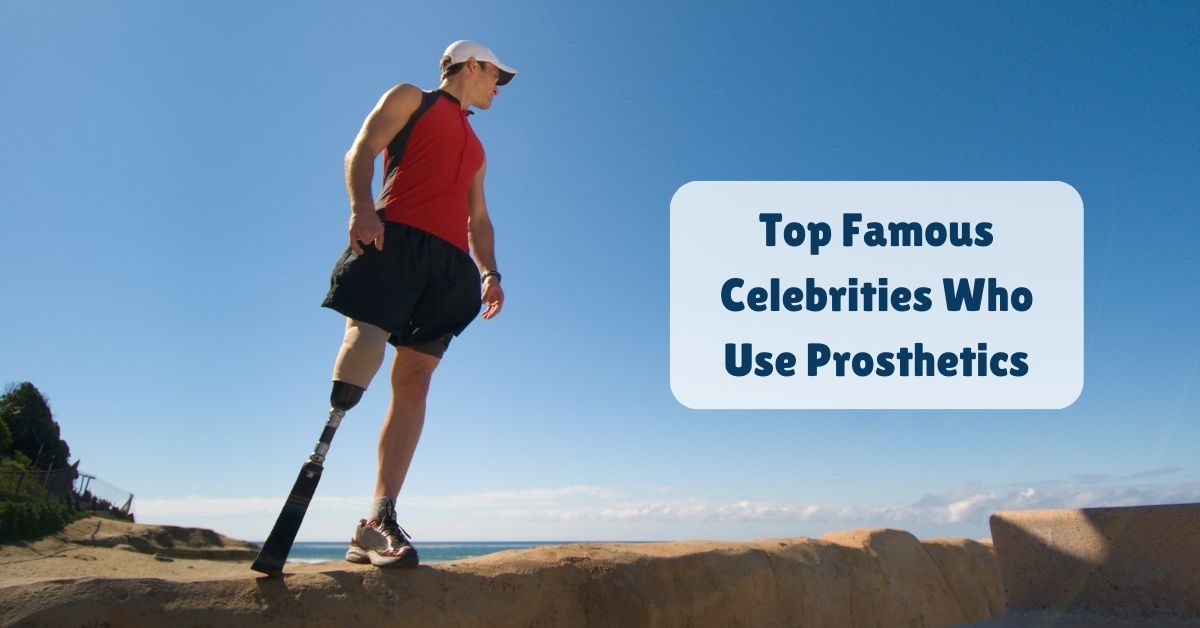
Top Famous Celebrities Who Use Prosthetics
Prosthetics have not only transformed the lives of ordinary people but have also enabled celebrities to continue pursuing their dreams and inspiring millions around the world. Despite facing challenges such as limb loss or congenital conditions, many well-known figures have shown remarkable resilience and strength by embracing prosthetics. Their journeys serve as a testament to the power of modern prosthetic technology and the human spirit. Here are some top celebrities who use prosthetics and their inspiring stories.
Sudha Chandran – Renowned Indian Dancer and Actress
Sudha Chandran, a celebrated Indian classical dancer and actress, lost her right leg in a tragic accident at the age of 16. Despite this life-changing event, she persevered and began using a Jaipur Foot, a highly functional prosthetic limb.
Sudha’s journey back to dance was not easy, but her grit and determination led her to become one of the most inspiring Bharatanatyam dancers in India. Her story is a testament to the power of resilience and is frequently cited as a beacon of hope for individuals with disabilities.
Arunima Sinha – First Female Amputee to Climb Mount Everest
Arunima Sinha, a former Indian national-level volleyball player, lost her left leg in a tragic train accident. However, she didn’t let the incident define her future. With immense determination, she became the first female amputee to climb Mount Everest in 2013.
Arunima uses a prosthetic leg designed for challenging terrains, showcasing the strength of human willpower and the role of advanced technology in enabling dreams. She continues to inspire many as a motivational speaker and author.
Amy Purdy – Paralympic Snowboarder and Motivational Speaker
Amy Purdy is a Paralympic bronze medalist in snowboarding, an author, and a motivational speaker. After losing both her legs below the knee to bacterial meningitis at the age of 19, Amy turned her life around with incredible determination. She uses advanced prosthetic legs specifically designed for snowboarding, enabling her to perform at an elite level.
Amy is also known for her appearance on Dancing with the Stars, where she stunned audiences with her extraordinary performances, proving that prosthetics are no barrier to artistic and athletic expression.
Zac Vawter – Pioneer of Bionic Prosthetics
Zac Vawter, though not a celebrity in the traditional sense, became internationally recognized for his role in testing a revolutionary bionic leg. After losing his right leg in a motorcycle accident, Zac worked with researchers to develop and use a prosthetic limb controlled by his mind.
In 2012, he climbed 103 flights of stairs to the top of the Willis Tower in Chicago, showcasing the capabilities of this advanced technology. His efforts have paved the way for further innovations in the field of prosthetics.
Aimee Mullins – Athlete, Actress, and Advocate
Aimee Mullins is an accomplished Paralympian, actress, and public speaker. Born with fibular hemimelia, she had both legs amputated below the knee as a child. Aimee has used a variety of prosthetic limbs throughout her life, including some designed for sports and others created as fashion statements.
Aimee gained fame as a sprinter, competing in the Paralympics, and later transitioned into modeling and acting. She is known for challenging societal perceptions of disability and redefining beauty standards through her work.
Heather Mills – Model and Activist
Heather Mills is a model, activist, and businesswoman who lost her left leg below the knee in a traffic accident in 1993. Determined not to let her injury define her, Heather became an advocate for amputees and a vocal supporter of prosthetic advancements.
Heather has participated in numerous athletic events, including skiing competitions, using prosthetics designed for high-impact sports. Her determination and advocacy work have made her a role model for many.
Bethany Hamilton – Professional Surfer
Bethany Hamilton, a professional surfer, lost her left arm in a shark attack when she was just 13 years old. Her inspiring story of resilience and determination has been widely shared through the film Soul Surfer and her autobiography.
Bethany uses a custom prosthetic to help her grip her surfboard and maintain balance while riding waves. Despite the challenges, she has continued to compete professionally and inspire people around the world with her passion and perseverance.
Alex Brooker – Comedian and TV Presenter
Alex Brooker is a British comedian and television presenter best known for his work on The Last Leg, a comedy show that celebrates diversity and inclusion. Born with limb differences, Alex uses a prosthetic leg to aid mobility.
Through his humor and openness, Alex has become an advocate for disability awareness, using his platform to break down stereotypes and show that prosthetics can be seamlessly integrated into a successful career.
Nick Santonastasso – Motivational Speaker and Fitness Enthusiast
Born with a rare condition called Hanhart syndrome, Nick Santonastasso was born without both legs and most of his arms. Despite this, Nick has become a successful motivational speaker, bodybuilder, and social media influencer.
Nick uses prosthetics for mobility and weightlifting, showcasing how technology and determination can enable people to exceed societal expectations. His positive attitude and work ethic have inspired countless individuals to overcome their challenges.
Rebekah Marine – Model
Rebekah Marine is a fashion model who uses a myoelectric prosthetic arm. Known as the "bionic model," Rebekah has walked the runway at New York Fashion Week and appeared in major fashion campaigns.
Rebekah’s journey demonstrates how prosthetics can be more than functional—they can also be empowering tools that enhance self-expression and confidence. She has become a symbol of inclusivity in the fashion industry.
Terry Fox – Marathon of Hope Pioneer
Terry Fox is a Canadian hero who embarked on the "Marathon of Hope" to raise awareness and funds for cancer research after losing his right leg to osteosarcoma. Running across Canada with a prosthetic leg, Terry covered 3,339 miles before his journey was cut short by the return of his cancer.
Terry’s legacy lives on through the annual Terry Fox Run, which has raised millions for cancer research. His determination and courage continue to inspire people worldwide.
Hugh Herr – Climber and Bionic Prosthetics Innovator
Hugh Herr, a renowned rock climber and MIT scientist, lost both legs below the knee to frostbite after a climbing accident. Refusing to give up his passion for climbing, Hugh developed specialized prosthetics that allowed him to return to the sport.
Today, Hugh is a leader in bionic prosthetic technology, working to create devices that restore mobility and function to people with limb loss. His innovations have redefined what prosthetics can achieve.
Inspiring Stories of Triumph and Strength
The stories of these remarkable individuals demonstrate that prosthetics are not barriers but tools that can empower people to achieve greatness.
From sports and entertainment to science and advocacy, these celebrities have broken boundaries, proving that life with a prosthetic limb is filled with potential. Their journeys inspire millions to embrace challenges, redefine limitations, and pursue their dreams with confidence.
By sharing these stories, we not only celebrate their achievements but also shine a light on the incredible advancements in prosthetic technology that make these successes possible. Whether you’re considering a prosthetic or looking for inspiration, these individuals remind us that resilience, determination, and the right tools can lead to extraordinary outcomes. more active and fulfilling life. With perseverance and the right support, you’ll soon discover the possibilities that a prosthetic limb can open up for you.
Always consult with a qualified healthcare provider or prosthetist regarding any concerns or questions about your prosthetic limb and its usage. Individual needs and circumstances may vary, and a healthcare professional can provide personalized guidance tailored to your specific situation.
Adjusting your prosthetic limb is a normal part of living with one, and recognizing the signs early can save you from unnecessary discomfort or reduced mobility. Pay attention to your body and your prosthetic to ensure they work together seamlessly. By addressing these issues promptly and maintaining regular contact with your prosthetist, you can continue to enjoy a comfortable, active, and independent lifestyle.
Always consult with a qualified healthcare provider or prosthetist regarding any concerns or questions about your prosthetic limb and its usage. Individual needs and circumstances may vary, and a healthcare professional can provide personalized guidance tailored to your specific situation.
Looking for a dependable orthotic components supplier in India for your specific requirements? Contact us today to discuss your application, product needs, and fabrication requirements with our team. Let’s work together to support better orthotic solutions from the very first component.
Frequently Asked Questions
What Is The Main Difference Between Custom-Made And Prefabricated Orthoses?
Custom-made orthoses are designed and fabricated for an individual using their measurements, anatomy, and functional requirements. Prefabricated orthoses are manufactured in standard designs and sizes and are selected from available options based on the user's needs.
Are Prefabricated Orthoses Effective?
Yes, prefabricated orthoses can be effective when their design, size, and support characteristics are appropriate for the person's condition and intended use. Their effectiveness depends on the individual application rather than simply being labelled as prefabricated.
Are Custom-Made Orthoses Always Better?
No. Custom-made orthoses are not automatically better for every user or condition. Research in areas such as plantar heel pain has not consistently demonstrated a clear advantage of custom foot orthoses over prefabricated alternatives for all outcomes.
How Are Custom Orthoses Made?
Custom orthoses are usually developed after an individual assessment. Depending on the device, the process may involve measurements, casting, impressions, or digital scanning, followed by design, fabrication, fitting, and adjustments.
Who Can Help Select The Right Orthosis?
A qualified orthotic professional or appropriate healthcare professional can assess the person's condition, anatomy, movement, activity requirements, and intended use before recommending a suitable orthotic solution.