Summary : Choosing an orthosis is not simply about picking a device from a shelf. The right option depends on the body part being supported, the level of correction required, comfort, daily activities, and individual anatomy. This article explains the difference between custom-made and prefabricated orthoses, how they are designed and fitted, where each option may be useful, and how professional assessment can help guide the decision.
Orthoses are external devices used to support, align, protect, stabilise, or assist parts of the body. They can be designed for the foot, ankle, knee, spine, hand, wrist, and other areas depending on the user’s needs. Some are made specifically for one person, while others are manufactured in standard sizes and supplied ready to use.
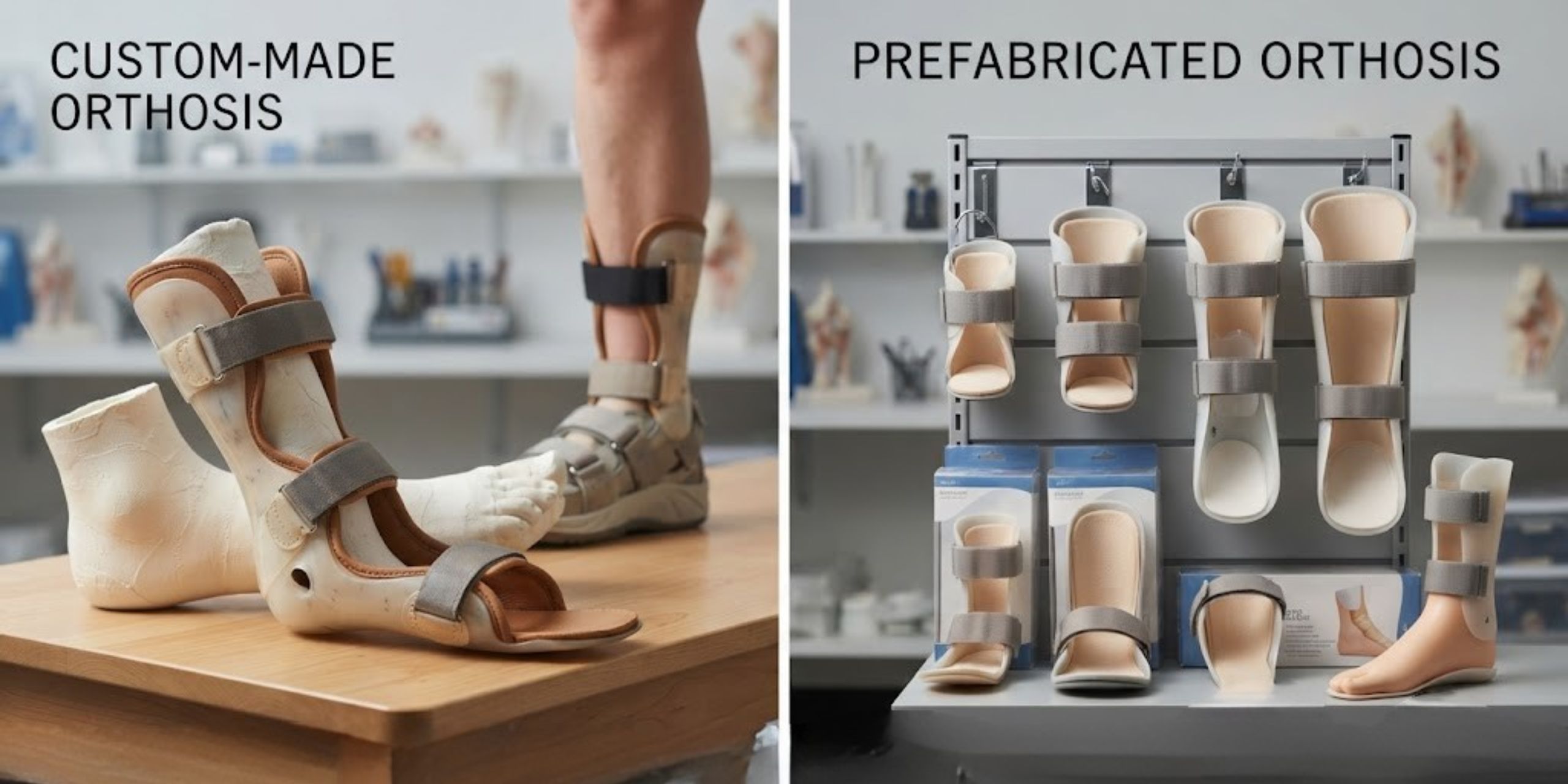
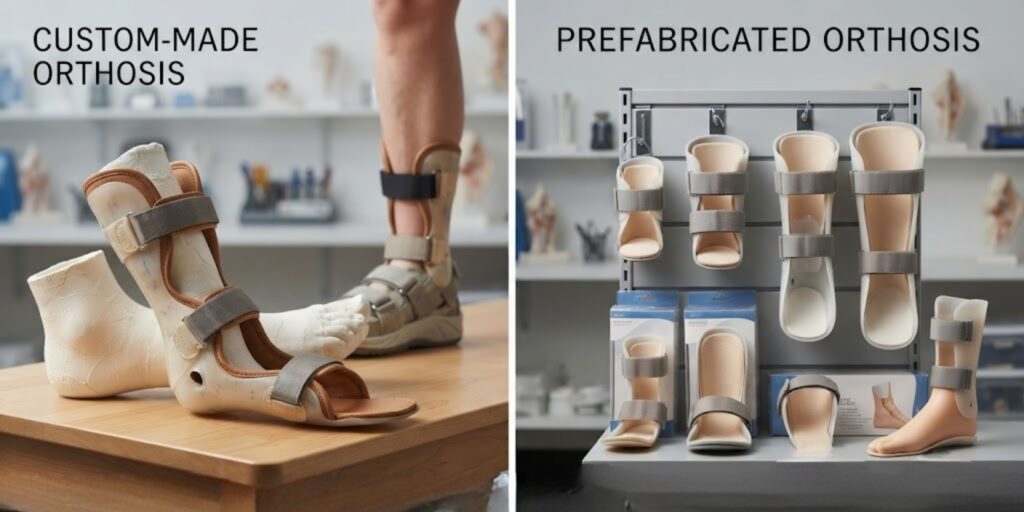
This is where the difference between custom-made and prefabricated orthoses becomes important. A custom-made orthosis is developed around an individual’s anatomy and functional requirements, while a prefabricated orthosis follows a standard design and sizing system. Neither option is automatically suitable for every person. The purpose of the device and the individual’s needs should guide the choice.
What Are Custom-Made Orthoses?
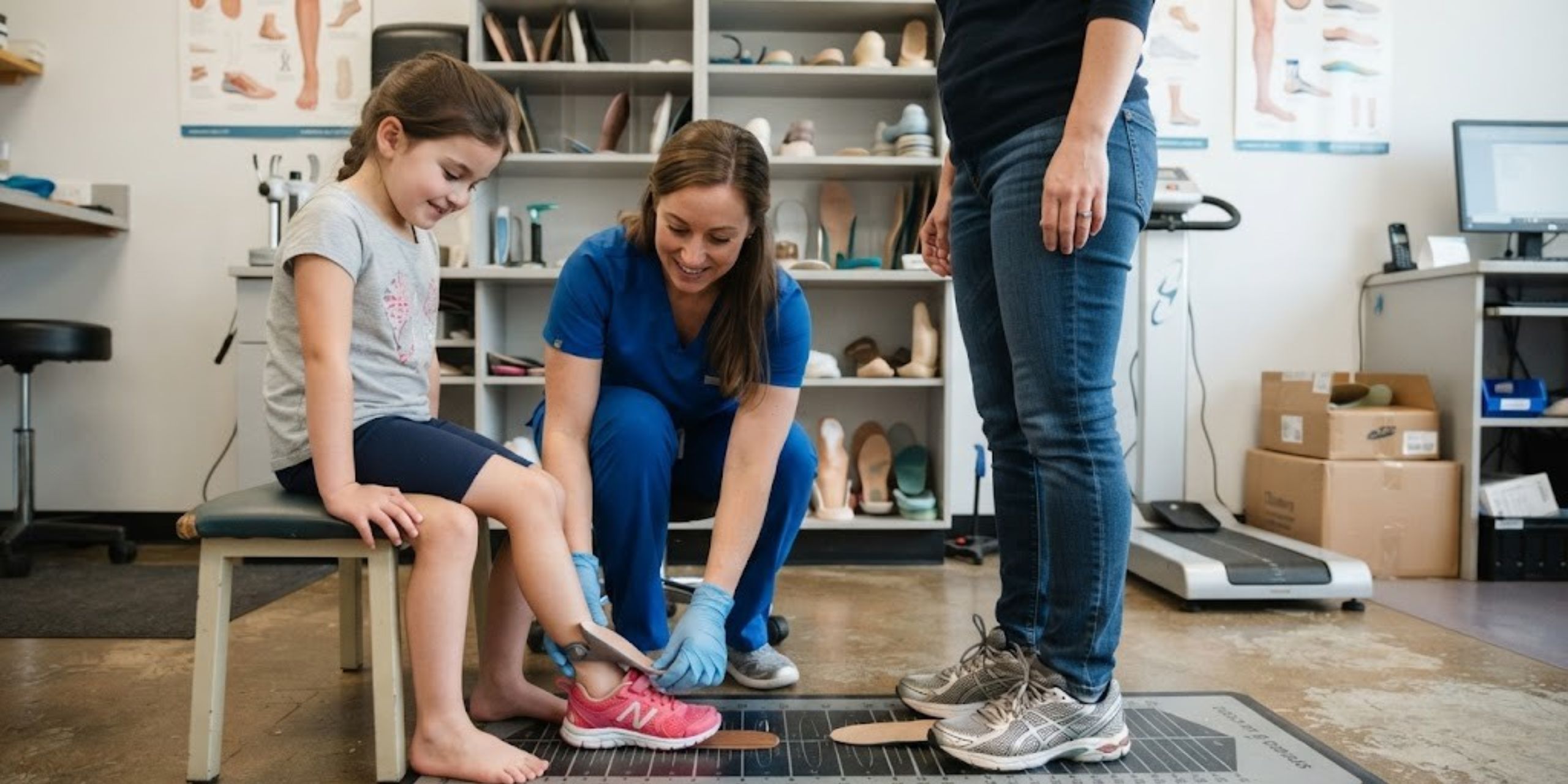
Custom-made orthoses are designed and fabricated for a particular individual. The process generally starts with an assessment of the person’s condition, anatomy, movement, functional requirements, and intended use of the device.
Depending on the body area and type of orthosis, the practitioner may take measurements, create an impression or cast, or use digital scanning technology. These details are then used to develop an orthosis with the required shape, support, alignment, and control.
Customisation can also involve selecting specific materials, joints, straps, padding, or other components. Once the device is produced, it can be checked during fitting and adjusted where necessary to improve comfort and function.
Individual Fit And Design
One of the main characteristics of a custom-made orthosis is its individual fit. The device is not simply chosen because it matches a standard size. Instead, its dimensions and design are based on the user’s anatomy and the clinical purpose of the orthosis.
This can be especially useful when a person has unusual anatomy, significant asymmetry, specific pressure-distribution needs, or functional requirements that are difficult to meet with a standard device.
Personalised Fabrication Process
Custom fabrication usually involves several stages rather than immediate supply. Assessment, design, fabrication, fitting, and follow-up can all form part of the process. This makes it possible to make refinements when required.
What Are Prefabricated Orthoses?
Prefabricated orthoses are manufactured in advance using standard designs, shapes, and size ranges. They are commonly referred to as ready-made or off-the-shelf orthoses because they are already produced before the individual is assessed.
These devices are available for many different applications and can provide support, cushioning, positioning, or protection without requiring complete individual fabrication.
A prefabricated orthosis may still be selected carefully according to size and function. In some cases, minor adjustments can also be made to improve the fit. However, the level of customisation is generally more limited than with a device specifically fabricated for one individual.
Standard Sizing And Availability
Because prefabricated devices are produced beforehand, they are generally quicker to obtain. This can be useful when a standard design already provides the required level of support.
Practical And Functional Use
A prefabricated orthosis may be appropriate when the person’s requirements can be adequately addressed with a standard design and fit. Their suitability should still be considered in relation to the condition, activity level, comfort, and intended function.
What Are The Key Differences Between Custom And Prefabricated Orthoses?
Although both types are designed to support or improve function, they differ in several important ways. The choice between these options often depends on fit, intended function, and the level of individualisation required. A closer look at custom vs prefabricated foot orthoses can provide additional context when considering different designs and applications.
Fit And Sizing
Custom-made orthoses are shaped around an individual’s measurements and anatomy. Prefabricated orthoses are supplied according to standard size ranges. A standard device can fit very well when the user’s anatomy closely matches its design. A custom orthosis allows more control when standard dimensions are not sufficient.
Manufacturing Process
A prefabricated orthosis is manufactured before the user receives it. A custom-made orthosis is fabricated specifically after assessment and design information has been collected. This difference can affect production time, fitting procedures, and the extent of individual modification.
Adjustability
Custom devices generally provide greater scope for individual modifications because they are designed around a particular requirement. Prefabricated devices can sometimes be adjusted, but their design and structure may limit the amount of modification possible. Knowing the signs you need an adjustment for your prosthetic limb can help maintain comfort, stability, and effective everyday use.
Availability
Prefabricated orthoses are normally available more quickly because they are already manufactured. Custom-made devices require additional steps such as assessment, measurement, fabrication, and fitting.
Cost Considerations
Custom fabrication can involve additional professional assessment, materials, labour, and manufacturing steps. As a result, it may cost more than a standard prefabricated option. However, cost should not be the only consideration. A less expensive device is not necessarily the appropriate choice if it does not provide the support, fit, or function required.
Intended Use
The intended function of the orthosis is one of the most important considerations. A standard device may be sufficient for some support needs, while a more complex requirement may call for individual fabrication. The right choice depends on the person and the purpose of the orthosis rather than the label alone.
When Can Prefabricated Orthoses Be A Suitable Choice?
Prefabricated orthoses can be useful when the required support can be provided through a standard design and the device fits comfortably. They may be considered for general support, temporary use, cushioning, positioning, or certain conditions where a standard design can meet the required functional goal. They can also be practical when quick availability is important.
Importantly, prefabricated does not mean unsuitable or ineffective. Clinical evidence in conditions such as plantar heel pain has not consistently shown custom foot orthoses to provide better outcomes than prefabricated options across all measures and follow-up periods. The evidence also varies according to the condition and type of orthosis being studied. The main question should therefore be whether the device provides an appropriate fit and the required level of support.
Evidence on custom and prefabricated foot orthoses can help provide a broader understanding of their clinical effectiveness and potential cost considerations.
When Can Custom-Made Orthoses Be A Suitable Choice?
Custom-made orthoses may be considered when a person’s needs cannot be adequately addressed through a standard device. This may include situations involving significant anatomical differences, unusual limb shape, asymmetry, specific pressure-relief requirements, complex alignment needs, specialised footwear, or particular functional goals.
Custom fabrication can also allow greater control over the shape, materials, support points, and mechanical features incorporated into the device. For some users, the benefit of customisation is not simply greater comfort. It may also be the ability to create a device around a specific functional requirement that would be difficult to achieve with standard sizing.
Still, custom-made does not automatically mean better in every situation. The clinical requirement should determine whether the additional customisation is actually needed.
How Can An Orthotic Professional Help With The Right Choice?
An orthotic professional can help identify the type of device that best matches the individual’s condition and daily requirements.
- An orthotic professional evaluates symptoms, diagnosis, anatomy, movement, strength, and range of motion carefully.
- Assessment also considers pressure areas, activity level, footwear, and the orthosis’s intended function.
- These details help determine whether a prefabricated device can adequately meet individual needs.
- Custom fabrication may offer better support when conditions, anatomy, or functional requirements are complex.
- Proper fitting, comfort checks, adjustments, and follow-up remain important after receiving any orthotic device.
- Choosing an orthosis means matching its design with the person’s condition, lifestyle, and goals.
What Should You Consider Before Choosing An Orthosis?
Before selecting an orthosis, consider the condition being addressed, the body part involved, the required level of support, comfort, footwear compatibility, activity level, and how long the device is expected to be used.
Footwear can also influence how comfortable and effective an orthosis feels during daily use. Choosing the best footwear choices with enough space, proper support, and a suitable shape can help accommodate the device without creating unnecessary pressure or discomfort.
It is also important to think about whether the device may need future adjustments. Someone with a straightforward requirement may do well with a suitable prefabricated option, while another person may require a more individualised solution. Professional evaluation can help prevent problems caused by poor fit, inappropriate support, or using a device that does not match the intended function.
The Right Orthotic Components Start With The Right Partner
A well-designed orthosis needs dependable components to achieve the right balance of support, comfort, fit, and function. PROACTIVE Technical Orthopaedics helps professionals source quality solutions for different orthotic applications, making component selection simpler and more reliable.
Looking for a dependable orthotic components supplier in India for your specific requirements? Contact us today to discuss your application, product needs, and fabrication requirements with our team. Let’s work together to support better orthotic solutions from the very first component.
Frequently Asked Questions
What Is The Main Difference Between Custom-Made And Prefabricated Orthoses?
Custom-made orthoses are designed and fabricated for an individual using their measurements, anatomy, and functional requirements. Prefabricated orthoses are manufactured in standard designs and sizes and are selected from available options based on the user’s needs.
Are Prefabricated Orthoses Effective?
Yes, prefabricated orthoses can be effective when their design, size, and support characteristics are appropriate for the person’s condition and intended use. Their effectiveness depends on the individual application rather than simply being labelled as prefabricated.
Are Custom-Made Orthoses Always Better?
No. Custom-made orthoses are not automatically better for every user or condition. Research in areas such as plantar heel pain has not consistently demonstrated a clear advantage of custom foot orthoses over prefabricated alternatives for all outcomes.
How Are Custom Orthoses Made?
Custom orthoses are usually developed after an individual assessment. Depending on the device, the process may involve measurements, casting, impressions, or digital scanning, followed by design, fabrication, fitting, and adjustments.
Who Can Help Select The Right Orthosis?
A qualified orthotic professional or appropriate healthcare professional can assess the person’s condition, anatomy, movement, activity requirements, and intended use before recommending a suitable orthotic solution.