
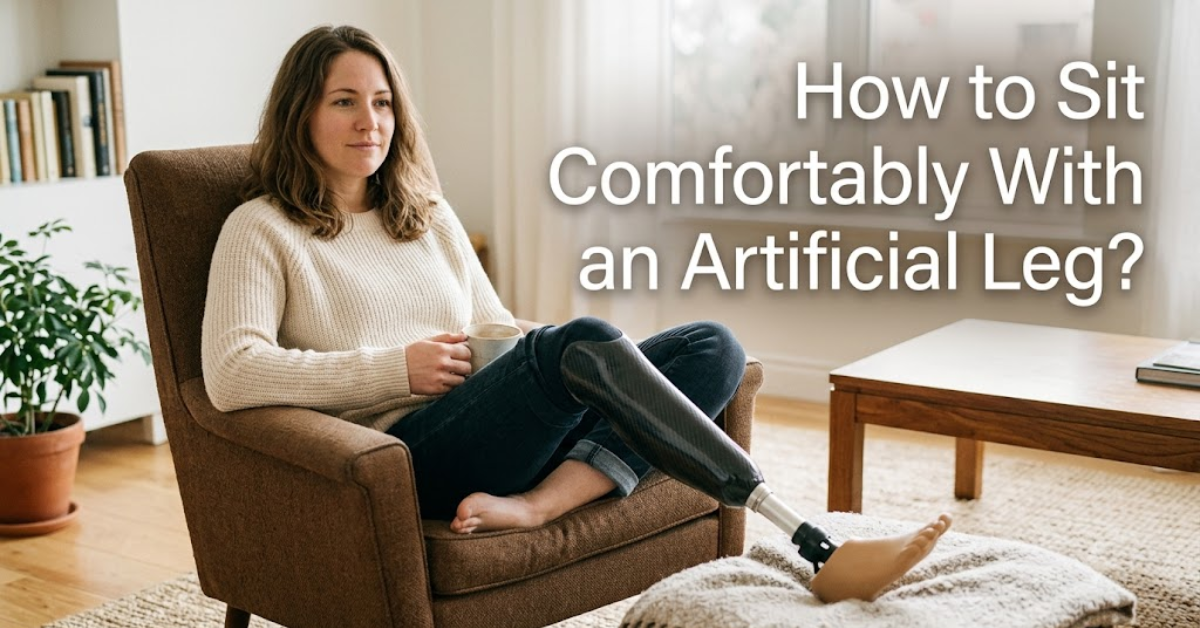
Summary : How to Sit comfortably with an artificial leg is usually a matter of good socket fit, the right chair height, correct knee and foot position, and regular pressure relief. This guide explains practical sitting techniques for below-knee and above-knee prosthesis users, how to manage long periods at a desk or while travelling, and when discomfort may indicate that the prosthesis needs professional adjustment.
Sitting looks simple, but a prosthetic leg changes how pressure is distributed across the residual limb, socket, hip, knee, and lower back. A chair that feels comfortable for one person may push against another person’s socket brim or leave the prosthetic foot in an awkward position. The goal is not to force the artificial leg into a “normal” pose. It is to create a stable, supported position that protects the skin and lets the body relax. A well-fitted prosthesis and good sitting habits usually make everyday activities such as office work, meals, car journeys, and social visits much easier.
Start With a Stable Chair and Good Seat Height
Choose a firm chair with a stable base, supportive backrest, and enough space for the prosthetic leg. Very low sofas can be difficult because the hips drop below the knees and the socket may press into the groin or upper thigh. Very high chairs can leave the sound-side foot unsupported. A useful starting point is a seat height that allows the sound-side foot to rest flat while the pelvis stays level.
Armrests can make sitting down and standing up easier, particularly during early rehabilitation or when balance is limited. Avoid chairs that roll, swivel unexpectedly, or sink deeply until you are confident using them. If you regularly work at a desk, adjust both chair and desk rather than trying to adapt your body to fixed furniture.
Position the Prosthetic Foot Before You Sit
Before lowering yourself, place the prosthetic foot where it will not catch under the chair or twist the socket. Many users find it comfortable to position the prosthetic foot slightly forward. This can be especially useful for an above-knee prosthesis because a prosthetic knee may not flex in exactly the same way as a biological knee.
Your rehabilitation team may teach a specific sit-to-stand technique based on your amputation level and knee component. If you use an above-knee system, the behavior of the prosthetic knee joint matters: some knees provide controlled resistance during sitting, while simpler joints may require a different movement strategy.
Keep Your Hips and Pelvis Level
Uneven sitting can lead to fatigue in the lower back, hips, and sound-side leg. Try to place weight through both sides of the pelvis rather than leaning away from the prosthesis all day. A small change in socket comfort can make people unconsciously shift to one side, so notice whether one shoulder or hip is consistently higher.
If the socket prevents you from sitting squarely, do not simply tolerate it. The shape or trim lines may need review. Custom lower-limb prosthetic fitting is designed around the individual residual limb, and sitting comfort should be discussed during fitting as well as walking comfort.
Comfort Tips for Below-Knee Prosthesis Users
Below-knee users usually retain their natural knee, so the main issues are often socket pressure behind the knee, suspension tightness, and the position of the prosthetic foot. Sit with the knee comfortably bent and avoid forcing it into extreme flexion for long periods. If the socket digs into the back of the knee, causes numbness, or leaves persistent skin marks, ask your prosthetist to check the fit.
Some people prefer a small amount of space under the prosthetic foot when sitting, while others are more comfortable with the foot supported. The correct choice depends on limb length, socket design, and chair height. The important point is that the leg should not hang in a way that pulls strongly on the residual limb.
Comfort Tips for Above-Knee Prosthesis Users
Above-knee users may need extra space for the socket and prosthetic knee. When possible, choose chairs without a hard front edge pressing into the back of the thigh. Sitting slightly toward the front of the chair can sometimes reduce pressure, but the back should still be supported.
Different knee systems flex and resist movement differently. Mechanical, pneumatic, hydraulic, and microprocessor systems may each feel different during sitting. A suitable above-knee prosthetic kit and correct alignment can improve both walking and everyday positions such as sitting, standing, and transferring.
Manage Heat, Sweat, and Residual-Limb Pressure
Long sitting can increase heat and moisture inside the socket. If your clinical team says it is safe, take regular breaks to stand, walk briefly, or remove the prosthesis when appropriate. Check the skin during the day, especially after unusually long periods of sitting.
A liner should be clean, dry, and correctly sized. If the residual limb changes volume, the socket may feel tighter or looser at different times. Adjust prosthetic socks only according to the method your prosthetist has taught you. Persistent pressure, burning, or skin breakdown is not something to “get used to.”
Sitting at a Desk or Office for Long Hours
For desk work, keep frequently used items within easy reach so you do not repeatedly twist from the waist. If possible, alternate between sitting and brief standing or walking periods. A footrest can help in some setups, but it should not push the prosthetic foot into an unnatural angle.
Allow enough space under the desk for the prosthetic knee or foot. Tight desk panels can force the leg sideways. If you spend most of the day seated, ask your prosthetist whether your socket, liner, or suspension choice is suitable for prolonged sitting as well as walking.
Sitting in Cars, Trains, and Public Transport
Travel seats are often narrower than home furniture. Try to keep the prosthetic leg where it will not be struck by luggage or other passengers. On long journeys, movement breaks are useful when safe. Carry any sock-ply or liner items you normally use, because residual-limb volume may change during extended sitting.
For more travel-specific preparation, Protech Ortho’s guide on travelling with prosthetics covers practical planning for transport, weather, mobility, and prosthetic care.
When Sitting Discomfort Needs a Prosthetist
Contact your prosthetist if sitting causes repeated numbness, sharp pressure, skin wounds, socket edge pain, excessive rotation, or a feeling that the prosthesis is pulling away from the limb. New discomfort can also appear after weight change, swelling, muscle change, or a change in activity.
Do not grind, cut, heat, or reshape a socket yourself. Small alignment and trim-line changes can affect the entire prosthetic system. A professional can check the socket, suspension, adapters, and prosthetic components together.
Make Comfortable Sitting Part of Everyday Prosthetic Care
Comfortable sitting comes from a combination of good furniture, good body position, and a prosthesis that fits the way you actually live. Pay attention to pressure, keep the pelvis level, allow enough room for the artificial leg, and change position regularly.
If sitting remains difficult despite good technique, a clinical review may help. Working with an experienced prosthetics manufacturer and clinical team in India can help ensure that socket fit, alignment, and component choice support daily life rather than only walking. Contact us to discuss your prosthetic care needs and get guidance on improving comfort during everyday sitting and movement.
Frequently Asked Questions
Can I sit normally with a prosthetic leg?
Yes. Most prosthetic users can sit comfortably once they learn an appropriate technique and have a well-fitted socket.
Should I keep my prosthetic foot flat while sitting?
Not always. The best position depends on chair height, amputation level, and component design. Comfort and socket pressure are more important than forcing one position.
Why does my socket hurt when I sit?
The socket edge may be pressing into soft tissue, the limb may have changed volume, or the chair may be too low. Persistent pain should be reviewed by a prosthetist.
Is a low sofa suitable for an artificial leg?
It can be difficult, especially for above-knee users. A firmer, slightly higher seat with armrests is often easier.
Can I remove my prosthetic leg while sitting for a long time?
Some users do, but whether this is practical or advisable depends on the situation and your clinical plan.
How often should I stand during desk work?
There is no single schedule for everyone, but regular movement and pressure relief are generally helpful if your health and rehabilitation plan allow it.
Why does my residual limb swell after sitting?
Fluid shifts and reduced movement can affect limb volume. If swelling is new, severe, or persistent, speak with your healthcare team.
Can a prosthetic knee make sitting easier?
Yes. Some knee designs provide features that support controlled sitting, while others require a different technique.
Should I use a cushion on my chair?
A firm cushion may help some people, but a very soft cushion can reduce stability. Test changes carefully.
When should I get my prosthesis checked?
Seek review if you develop persistent pain, skin damage, looseness, repeated pressure marks, or a sudden change in how the prosthesis feels.