Best Footwear Choices for Prosthetic Users
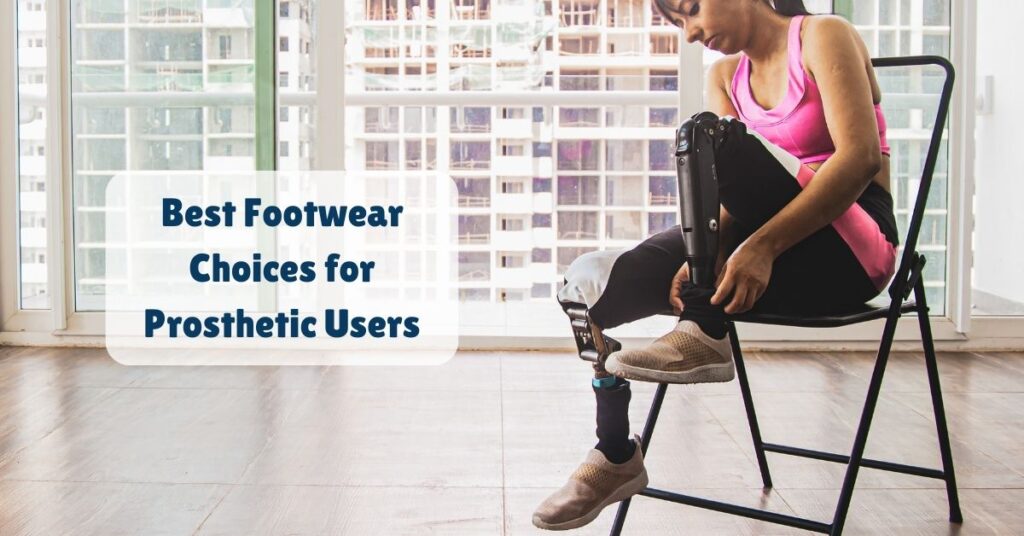
What Is The Difference Between Custom-Made And Prefabricated Orthoses Summary : Choosing an orthosis is not simply about picking a device from a shelf. The right option depends on the body part being supported, the level of correction required, comfort, daily activities, and individual anatomy. This article explains the difference between custom-made and prefabricated orthoses, how they are designed and fitted, where each option may be useful, and how professional assessment can help guide the decision. Orthoses are external devices used to support, align, protect, stabilise, or assist parts of the body. They can be designed for the foot, ankle, knee, spine, hand, wrist, and other areas depending on the user's needs. Some are made specifically for one person, while others are manufactured in standard sizes and supplied ready to use. This is where the difference between custom-made and prefabricated orthoses becomes important. A custom-made orthosis is developed around an individual's anatomy and functional requirements, while a prefabricated orthosis follows a standard design and sizing system. Neither option is automatically suitable for every person. The purpose of the device and the individual's needs should guide the choice. What Are Custom-Made Orthoses? Custom-made orthoses are designed and fabricated for a particular individual. The process generally starts with an assessment of the person's condition, anatomy, movement, functional requirements, and intended use of the device. Depending on the body area and type of orthosis, the practitioner may take measurements, create an impression or cast, or use digital scanning technology. These details are then used to develop an orthosis with the required shape, support, alignment, and control. Customisation can also involve selecting specific materials, joints, straps, padding, or other components. Once the device is produced, it can be checked during fitting and adjusted where necessary to improve comfort and function. Individual Fit And Design One of the main characteristics of a custom-made orthosis is its individual fit. The device is not simply chosen because it matches a standard size. Instead, its dimensions and design are based on the user's anatomy and the clinical purpose of the orthosis. This can be especially useful when a person has unusual anatomy, significant asymmetry, specific pressure-distribution needs, or functional requirements that are difficult to meet with a standard device. Personalised Fabrication Process Custom fabrication usually involves several stages rather than immediate supply. Assessment, design, fabrication, fitting, and follow-up can all form part of the process. This makes it possible to make refinements when required. Best Footwear Choices for Prosthetic Users Finding the perfect footwear for prosthetic users is about more than just style—it’s a critical part of achieving comfort, mobility, and confidence in daily life. The right pair of shoes can improve your balance, reduce discomfort, and protect both your prosthetic limb and your natural one. For prosthetic users, footwear serves as both a functional necessity and a tool for personal expression, offering the opportunity to walk comfortably, move freely, and tackle the activities you love without limitations. However, with countless designs, materials, and features available, selecting the ideal footwear can feel daunting. Whether you’re shopping for everyday shoes, athletic gear, or something for a special occasion, understanding what to look for can make the process easier and more rewarding. This guide will provide you with practical tips, expert insights, and recommendations to help you choose footwear that complements your prosthetic and enhances your overall lifestyle. Importance of Proper Footwear for Prosthetic Users For individuals using prosthetics, footwear is more than just a fashion choice. Proper footwear: Enhances Comfort: Reduces pressure on the residual limb and ensures the prosthetic socket fits securely. Improves Balance: Helps maintain stability, especially during walking or standing. Protects the Prosthetic: Minimizes wear and tear, extending the lifespan of the prosthetic limb. Prevents Injuries: Reduces the risk of slips, trips, or falls caused by unsuitable footwear. Key Factors to Consider When Choosing Footwear 1. Proper Fit Footwear must fit snugly without being too tight or too loose. ill-fitting shoes can lead to discomfort, poor posture, and even injury. Always try both shoes on and walk around to test the fit. 2. Heel Height For prosthetic users, heel height plays a crucial role in maintaining balance. A heel height of around 1 inch is generally recommended. Avoid shoes with high heels as they can strain the prosthetic and impact stability. 3. Weight of the Shoe Lightweight shoes are ideal as they reduce the overall strain on the prosthetic limb, making it easier to move around. Heavy shoes can cause fatigue and unnecessary stress on the prosthetic joints. 4. Sole Material Look for shoes with non-slip soles made of rubber or similar materials. A firm, cushioned sole provides good shock absorption and reduces impact on the prosthetic foot and residual limb. 5. Adjustability Shoes with adjustable features, such as laces, Velcro straps, or buckles, are ideal. They allow for a more customized fit and accommodate swelling or size changes throughout the day. Footwear Options for Prosthetic Users 1. Athletic Shoes Athletic shoes are an excellent choice for their comfort, support, and lightweight design. Many models come with cushioned soles and adjustable features, making them suitable for prosthetic users who are active or enjoy sports. 2. Orthopedic Shoes Orthopedic shoes are specifically designed for individuals with unique mobility needs. These shoes often have extra cushioning, arch support, and adjustable straps, making them perfect for users with prosthetic limbs. 3. Slip-On Shoes Slip-on shoes are convenient for prosthetic users who may find tying laces challenging. Look for models with elasticized sides or stretchy material for ease of wear without compromising fit. 4. Boots Low-heeled boots with sturdy soles are a good choice for outdoor activities. They provide excellent ankle support, which is crucial for maintaining balance on uneven terrain. 5. Casual Walking Shoes Casual walking shoes are versatile and provide adequate support for everyday activities. Ensure they have good arch support and a cushioned insole for maximum comfort. Tips for Choosing the Right Footwear Consult Your Prosthetist: Always seek advice from your prosthetist when selecting footwear. They
10 Signs You Need an Adjustment for Your Prosthetic Limb
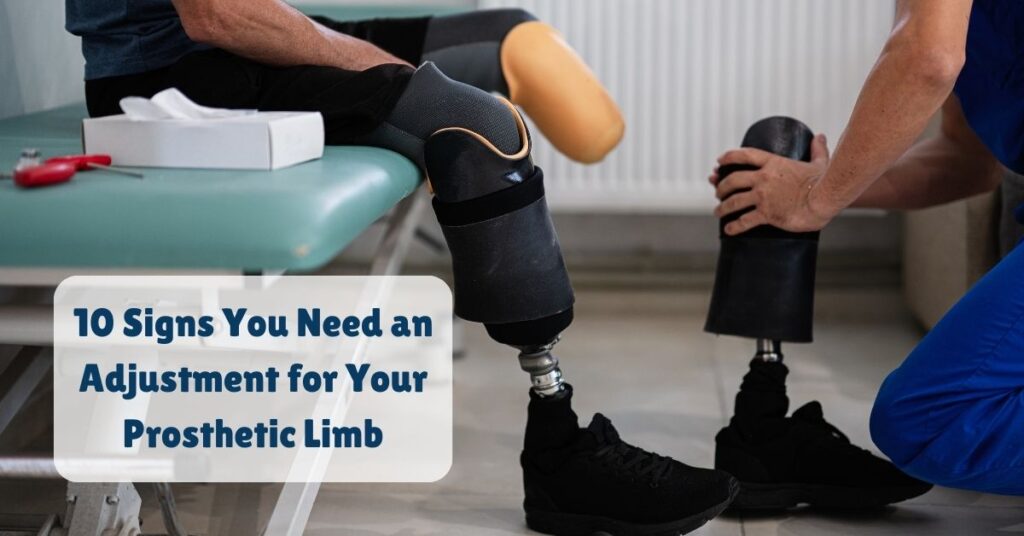
What Is The Difference Between Custom-Made And Prefabricated Orthoses Summary : Choosing an orthosis is not simply about picking a device from a shelf. The right option depends on the body part being supported, the level of correction required, comfort, daily activities, and individual anatomy. This article explains the difference between custom-made and prefabricated orthoses, how they are designed and fitted, where each option may be useful, and how professional assessment can help guide the decision. Orthoses are external devices used to support, align, protect, stabilise, or assist parts of the body. They can be designed for the foot, ankle, knee, spine, hand, wrist, and other areas depending on the user's needs. Some are made specifically for one person, while others are manufactured in standard sizes and supplied ready to use. This is where the difference between custom-made and prefabricated orthoses becomes important. A custom-made orthosis is developed around an individual's anatomy and functional requirements, while a prefabricated orthosis follows a standard design and sizing system. Neither option is automatically suitable for every person. The purpose of the device and the individual's needs should guide the choice. What Are Custom-Made Orthoses? Custom-made orthoses are designed and fabricated for a particular individual. The process generally starts with an assessment of the person's condition, anatomy, movement, functional requirements, and intended use of the device. Depending on the body area and type of orthosis, the practitioner may take measurements, create an impression or cast, or use digital scanning technology. These details are then used to develop an orthosis with the required shape, support, alignment, and control. Customisation can also involve selecting specific materials, joints, straps, padding, or other components. Once the device is produced, it can be checked during fitting and adjusted where necessary to improve comfort and function. Individual Fit And Design One of the main characteristics of a custom-made orthosis is its individual fit. The device is not simply chosen because it matches a standard size. Instead, its dimensions and design are based on the user's anatomy and the clinical purpose of the orthosis. This can be especially useful when a person has unusual anatomy, significant asymmetry, specific pressure-distribution needs, or functional requirements that are difficult to meet with a standard device. Personalised Fabrication Process Custom fabrication usually involves several stages rather than immediate supply. Assessment, design, fabrication, fitting, and follow-up can all form part of the process. This makes it possible to make refinements when required. 10 Signs You Need an Adjustment for Your Prosthetic Limb Living with a prosthetic limb can significantly enhance mobility and independence, but over time, adjustments may be necessary to maintain comfort, functionality, and proper alignment. Whether due to changes in your body or wear and tear of the prosthetic, recognizing the signs early can prevent discomfort and ensure you get the best experience. Here are 10 key signs that it may be time for a prosthetic adjustment. 1. Increased Discomfort or Pain One of the most noticeable signs that your prosthetic needs an adjustment is persistent discomfort or pain. Prosthetics are designed to fit snugly, but changes in your residual limb, such as swelling, weight fluctuations, or skin irritation, can make them uncomfortable. Pain may indicate misalignment or pressure points that need immediate attention. By proper prosthetics and skin care it is possible to avoid these discomforts. 2. Skin Irritation or Sores Skin issues like redness, blisters, or sores around the socket area can be a clear sign of a poor fit. These problems may occur if the prosthetic rubs against your skin due to looseness or uneven pressure distribution. Addressing these issues promptly can prevent infections and long-term skin damage. Certain medical conditions, like diabetes, can affect skin health and increase the risk of complications, including infections. It's crucial for individuals with such conditions to regularly monitor their prosthetic limb and skin condition, seeking prompt medical advice if any issues arise. 3. Difficulty Walking or Maintaining Balance If you find it harder to walk, maintain balance, or perform daily activities, your prosthetic alignment could be off. A misaligned prosthetic can throw off your gait, leading to awkward movements or even falls. An adjustment can restore proper function and ensure smoother movement. 4. Unusual Noises from the Prosthetic Clicks, creaks, or squeaks coming from your prosthetic limb are not normal. These sounds often indicate that components are loose, worn out, or improperly assembled. If you notice such noises, consult your prosthetist to assess and resolve the issue. 5. Change in Residual Limb Size or Shape The shape and size of your residual limb can change over time due to factors like weight gain, muscle atrophy, or swelling. These changes can cause your prosthetic to fit improperly, leading to discomfort and reduced functionality. Regular fittings can help accommodate these changes. 6. Reduced Performance During Activities If your prosthetic limb no longer supports you during physical activities as it once did, it might need adjustment. For instance, a sports prosthetic may lose its springiness or stability, making running, cycling, or swimming more challenging. This is a sign to revisit its fit or components. 7. Loosening or Sliding of the Prosthetic A properly fitted prosthetic should stay securely in place. If it starts to feel loose or slides around, it could be due to wear in the socket, liner, or suspension system. Adjustments or replacements of specific parts may be necessary to restore a snug fit. 8. Uneven Wear on the Prosthetic Inspect your prosthetic limb regularly for signs of uneven wear on the foot, joints, or other components. Uneven wear can indicate alignment issues or excessive strain on certain parts, which may lead to a breakdown if not addressed. A quick adjustment can prolong the life of the prosthetic. 9. Difficulty Putting On or Taking Off the Prosthetic If donning or doffing your prosthetic limb has become increasingly difficult, it may signal a change in fit or alignment. A well-adjusted prosthetic should be easy to handle without excessive force. Your prosthetist can tweak the fit
Debunking Common Myths About Prosthetics
What Is The Difference Between Custom-Made And Prefabricated Orthoses Summary : Choosing an orthosis is not simply about picking a device from a shelf. The right option depends on the body part being supported, the level of correction required, comfort, daily activities, and individual anatomy. This article explains the difference between custom-made and prefabricated orthoses, how they are designed and fitted, where each option may be useful, and how professional assessment can help guide the decision. Orthoses are external devices used to support, align, protect, stabilise, or assist parts of the body. They can be designed for the foot, ankle, knee, spine, hand, wrist, and other areas depending on the user's needs. Some are made specifically for one person, while others are manufactured in standard sizes and supplied ready to use. This is where the difference between custom-made and prefabricated orthoses becomes important. A custom-made orthosis is developed around an individual's anatomy and functional requirements, while a prefabricated orthosis follows a standard design and sizing system. Neither option is automatically suitable for every person. The purpose of the device and the individual's needs should guide the choice. What Are Custom-Made Orthoses? Custom-made orthoses are designed and fabricated for a particular individual. The process generally starts with an assessment of the person's condition, anatomy, movement, functional requirements, and intended use of the device. Depending on the body area and type of orthosis, the practitioner may take measurements, create an impression or cast, or use digital scanning technology. These details are then used to develop an orthosis with the required shape, support, alignment, and control. Customisation can also involve selecting specific materials, joints, straps, padding, or other components. Once the device is produced, it can be checked during fitting and adjusted where necessary to improve comfort and function. Individual Fit And Design One of the main characteristics of a custom-made orthosis is its individual fit. The device is not simply chosen because it matches a standard size. Instead, its dimensions and design are based on the user's anatomy and the clinical purpose of the orthosis. This can be especially useful when a person has unusual anatomy, significant asymmetry, specific pressure-distribution needs, or functional requirements that are difficult to meet with a standard device. Personalised Fabrication Process Custom fabrication usually involves several stages rather than immediate supply. Assessment, design, fabrication, fitting, and follow-up can all form part of the process. This makes it possible to make refinements when required. Debunking Common Myths About Prosthetics Prosthetics have come a long way in recent years, improving the lives of millions of people who have lost limbs. However, despite advances in technology and care, many myths and misconceptions about prosthetics still persist. These myths can create confusion, fear, and unnecessary barriers for those considering or using prosthetic limbs. In this article, we will debunk some of the most common myths surrounding prosthetics, helpful information for anyone seeking to understand more about them. Myth 1: Prosthetics are uncomfortable and hard to wear One of the most common misconceptions is that prosthetics are uncomfortable and difficult to wear for extended periods. While it's true that getting used to a prosthetic limb can take time, modern prosthetics are designed with comfort in mind. Advances in materials such as lightweight carbon fiber, silicone liners, and custom fittings ensure that prosthetics are much more comfortable than ever before and can be worn for longer duration. A prosthetist will take precise measurements to ensure the prosthetic fits well, minimizing discomfort. Regular adjustments may be necessary, especially in the early stages of use, as the body adapts to the new limb. With the right fit and proper care, many users report feeling comfortable and confident with their prosthetic, even after wearing it for several hours. Myth 2: Prosthetics look unnatural and obvious Many people believe that prosthetics are bulky and easily noticeable, making the user stand out in a negative way. However, today's prosthetics are designed to be as realistic and natural-looking as possible. Whether it’s a cosmetic prosthesis designed for aesthetic purposes or a functional prosthesis with advanced technology, options are available to suit the user’s preferences. For example, prosthetic arms and legs can be customized to match skin tone and texture, and high-tech options even replicate the movements and appearance of a natural limb. In addition, prosthetics for individuals with limb loss in visible areas, such as the hands or feet, often blend seamlessly with clothing and footwear. With proper fitting and design, prosthetics can look and feel as natural as possible, allowing users to feel more confident in their appearance. Myth 3: Prosthetics require constant maintenance and repair Another myth is that prosthetics are high-maintenance devices that require constant repairs. While it is important to take care of a prosthetic and keep it clean, modern prosthetics are designed to be durable and long-lasting. High-quality materials such as titanium, carbon fiber, and medical-grade plastics are used to make prosthetics that can withstand everyday use. That being said, prosthetic limbs do need some level of maintenance, just like any other piece of medical equipment. For example, it’s important to check for wear and tear, clean it regularly, and make minor adjustments when necessary. Regular checkups with a prosthetist can help ensure the prosthetic is functioning well and that any potential issues are addressed early. By staying on top of minor repairs and adjustments, prosthetic users can avoid serious issues and prolong the life of their limb. Myth 4: Prosthetics can only be used by older adults or those with severe disabilities Many people assume that prosthetics are only for older adults or individuals with severe disabilities. However, prosthetics are suitable for people of all ages and activity levels, from children to adults, and even active athletes. Prosthetic limbs are customized to fit the user’s needs, whether they require a prosthetic for basic daily activities or to pursue high-impact sports. For example, sports prosthetics are specifically designed for athletes who have lost a limb. These prosthetics are lightweight, durable, and built to
How Do Orthoses Help Manage Flat Feet In Children And Adults?
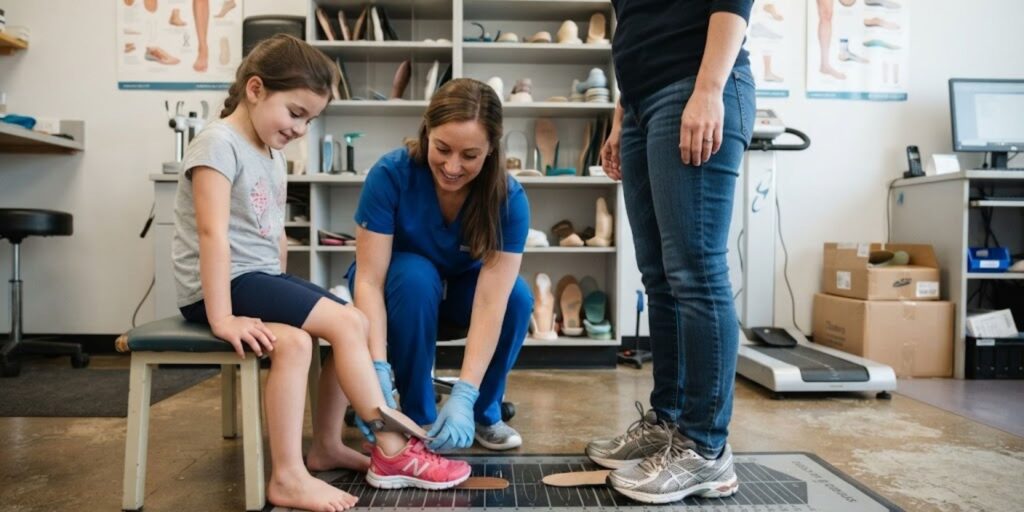
What Is The Difference Between Custom-Made And Prefabricated Orthoses Summary : Choosing an orthosis is not simply about picking a device from a shelf. The right option depends on the body part being supported, the level of correction required, comfort, daily activities, and individual anatomy. This article explains the difference between custom-made and prefabricated orthoses, how they are designed and fitted, where each option may be useful, and how professional assessment can help guide the decision. Orthoses are external devices used to support, align, protect, stabilise, or assist parts of the body. They can be designed for the foot, ankle, knee, spine, hand, wrist, and other areas depending on the user's needs. Some are made specifically for one person, while others are manufactured in standard sizes and supplied ready to use. This is where the difference between custom-made and prefabricated orthoses becomes important. A custom-made orthosis is developed around an individual's anatomy and functional requirements, while a prefabricated orthosis follows a standard design and sizing system. Neither option is automatically suitable for every person. The purpose of the device and the individual's needs should guide the choice. What Are Custom-Made Orthoses? Custom-made orthoses are designed and fabricated for a particular individual. The process generally starts with an assessment of the person's condition, anatomy, movement, functional requirements, and intended use of the device. Depending on the body area and type of orthosis, the practitioner may take measurements, create an impression or cast, or use digital scanning technology. These details are then used to develop an orthosis with the required shape, support, alignment, and control. Customisation can also involve selecting specific materials, joints, straps, padding, or other components. Once the device is produced, it can be checked during fitting and adjusted where necessary to improve comfort and function. Individual Fit And Design One of the main characteristics of a custom-made orthosis is its individual fit. The device is not simply chosen because it matches a standard size. Instead, its dimensions and design are based on the user's anatomy and the clinical purpose of the orthosis. This can be especially useful when a person has unusual anatomy, significant asymmetry, specific pressure-distribution needs, or functional requirements that are difficult to meet with a standard device. Personalised Fabrication Process Custom fabrication usually involves several stages rather than immediate supply. Assessment, design, fabrication, fitting, and follow-up can all form part of the process. This makes it possible to make refinements when required. How Do Orthoses Help Manage Flat Feet In Children And Adults? Summary : Flat feet can look different from one person to another, and they do not always require treatment. This article explains what flat feet are, how orthoses can support the feet, when they may be helpful for children and adults, the difference between custom and prefabricated options, and what people should realistically expect from orthotic treatment. Flat feet, also called pes planus, occur when the arch along the inner side of the foot appears lowered or comes closer to the ground when standing. They are common in children, and many people can have flat feet without experiencing pain or difficulty with everyday activities. Treatment is generally considered when symptoms or functional problems are present rather than simply because the arch looks low. Orthoses are devices worn inside footwear to provide support and influence how the foot bears weight during standing and movement. For someone with symptomatic flat feet, an appropriately selected orthosis may help with comfort, pressure distribution and certain aspects of foot function. However, orthoses should not automatically be viewed as a way to permanently reshape the foot. What Are Flat Feet And Why Do They Need Management? A normal foot has an arch that helps distribute forces and support the body during movement. With flat feet, the medial longitudinal arch appears reduced, and the heel or forefoot may also adopt a different position during weight-bearing. Flat feet can be broadly described as flexible or rigid. In flexible flat feet, an arch may become visible when the foot is not bearing weight or when the person rises onto their toes. Rigid flat feet remain flatter and may be associated with a more significant structural problem. In children, flexible flat feet are common during development, and a considerable number of cases are painless. Research reviews indicate that only a minority of children's flat feet cause pain or restrict gait. Management becomes more relevant when a person experiences foot pain, unusual fatigue, difficulty walking, reduced activity tolerance or other functional concerns. Flat feet can vary in severity and presentation, so understanding the condition is an important first step before deciding whether any treatment is needed. This guide to understanding flat feet can help explain the common types, symptoms and factors that may affect foot function. How Do Orthoses Help Manage Flat Feet? Orthoses are designed to interact with the foot and footwear while the person stands and moves. Their purpose is not simply to make the arch appear higher. Supporting The Foot Arch An orthosis can provide a supporting surface beneath the foot, particularly around the medial arch. This may help the foot feel more supported during standing and walking. Redistributing Pressure The design of an orthosis can affect how force is distributed across the sole of the foot. Instead of concentrating pressure in particular areas, support may help spread the load more comfortably during daily activities. Influencing Foot And Ankle Movement Foot orthoses can alter the way forces act on the foot and lower limb. Research in adults with flexible flat feet has found measurable effects on aspects of foot movement and physical function, although the overall quality of evidence has varied. Helping With Symptoms For people who have painful or symptomatic flat feet, orthoses may be used as part of conservative management to improve comfort and activity tolerance. The response can vary considerably from one person to another, which is why assessment and appropriate fitting matter. How Can Orthoses Help Children With Flat Feet? Children's feet continue to develop, so
What Is The Difference Between Custom-Made And Prefabricated Orthoses
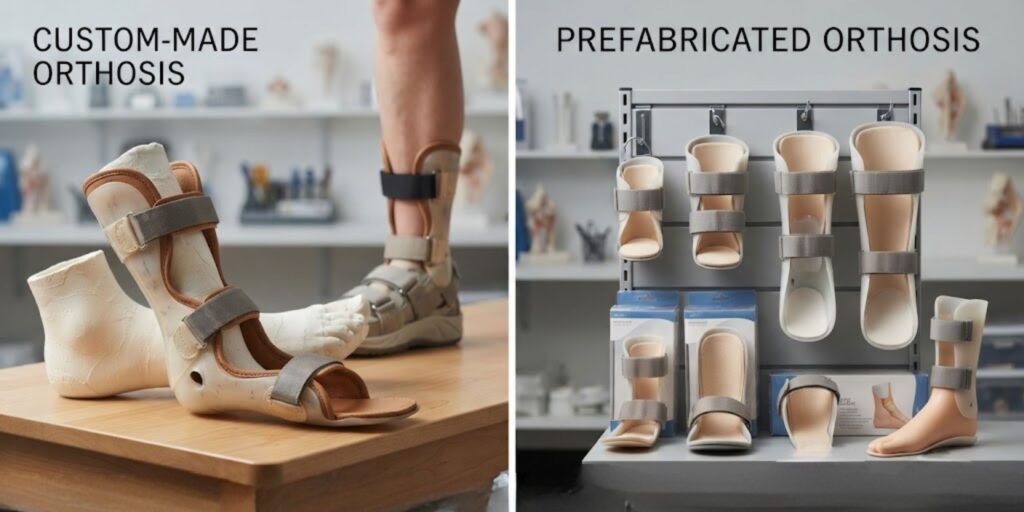
What Is The Difference Between Custom-Made And Prefabricated Orthoses Summary : Choosing an orthosis is not simply about picking a device from a shelf. The right option depends on the body part being supported, the level of correction required, comfort, daily activities, and individual anatomy. This article explains the difference between custom-made and prefabricated orthoses, how they are designed and fitted, where each option may be useful, and how professional assessment can help guide the decision. Orthoses are external devices used to support, align, protect, stabilise, or assist parts of the body. They can be designed for the foot, ankle, knee, spine, hand, wrist, and other areas depending on the user's needs. Some are made specifically for one person, while others are manufactured in standard sizes and supplied ready to use. This is where the difference between custom-made and prefabricated orthoses becomes important. A custom-made orthosis is developed around an individual's anatomy and functional requirements, while a prefabricated orthosis follows a standard design and sizing system. Neither option is automatically suitable for every person. The purpose of the device and the individual's needs should guide the choice. What Are Custom-Made Orthoses? Custom-made orthoses are designed and fabricated for a particular individual. The process generally starts with an assessment of the person's condition, anatomy, movement, functional requirements, and intended use of the device. Depending on the body area and type of orthosis, the practitioner may take measurements, create an impression or cast, or use digital scanning technology. These details are then used to develop an orthosis with the required shape, support, alignment, and control. Customisation can also involve selecting specific materials, joints, straps, padding, or other components. Once the device is produced, it can be checked during fitting and adjusted where necessary to improve comfort and function. Individual Fit And Design One of the main characteristics of a custom-made orthosis is its individual fit. The device is not simply chosen because it matches a standard size. Instead, its dimensions and design are based on the user's anatomy and the clinical purpose of the orthosis. This can be especially useful when a person has unusual anatomy, significant asymmetry, specific pressure-distribution needs, or functional requirements that are difficult to meet with a standard device. Personalised Fabrication Process Custom fabrication usually involves several stages rather than immediate supply. Assessment, design, fabrication, fitting, and follow-up can all form part of the process. This makes it possible to make refinements when required. What Are Prefabricated Orthoses? Prefabricated orthoses are manufactured in advance using standard designs, shapes, and size ranges. They are commonly referred to as ready-made or off-the-shelf orthoses because they are already produced before the individual is assessed. These devices are available for many different applications and can provide support, cushioning, positioning, or protection without requiring complete individual fabrication. A prefabricated orthosis may still be selected carefully according to size and function. In some cases, minor adjustments can also be made to improve the fit. However, the level of customisation is generally more limited than with a device specifically fabricated for one individual. Standard Sizing And Availability Because prefabricated devices are produced beforehand, they are generally quicker to obtain. This can be useful when a standard design already provides the required level of support. Practical And Functional Use A prefabricated orthosis may be appropriate when the person's requirements can be adequately addressed with a standard design and fit. Their suitability should still be considered in relation to the condition, activity level, comfort, and intended function. What Are The Key Differences Between Custom And Prefabricated Orthoses? Although both types are designed to support or improve function, they differ in several important ways. The choice between these options often depends on fit, intended function, and the level of individualisation required. A closer look at custom vs prefabricated foot orthoses can provide additional context when considering different designs and applications. Fit And Sizing Custom-made orthoses are shaped around an individual's measurements and anatomy. Prefabricated orthoses are supplied according to standard size ranges. A standard device can fit very well when the user's anatomy closely matches its design. A custom orthosis allows more control when standard dimensions are not sufficient. Manufacturing Process A prefabricated orthosis is manufactured before the user receives it. A custom-made orthosis is fabricated specifically after assessment and design information has been collected. This difference can affect production time, fitting procedures, and the extent of individual modification. Adjustability Custom devices generally provide greater scope for individual modifications because they are designed around a particular requirement. Prefabricated devices can sometimes be adjusted, but their design and structure may limit the amount of modification possible. Knowing the signs you need an adjustment for your prosthetic limb can help maintain comfort, stability, and effective everyday use. Availability Prefabricated orthoses are normally available more quickly because they are already manufactured. Custom-made devices require additional steps such as assessment, measurement, fabrication, and fitting. Cost Considerations Custom fabrication can involve additional professional assessment, materials, labour, and manufacturing steps. As a result, it may cost more than a standard prefabricated option. However, cost should not be the only consideration. A less expensive device is not necessarily the appropriate choice if it does not provide the support, fit, or function required. Intended Use The intended function of the orthosis is one of the most important considerations. A standard device may be sufficient for some support needs, while a more complex requirement may call for individual fabrication. The right choice depends on the person and the purpose of the orthosis rather than the label alone. When Can Prefabricated Orthoses Be A Suitable Choice? Prefabricated orthoses can be useful when the required support can be provided through a standard design and the device fits comfortably. They may be considered for general support, temporary use, cushioning, positioning, or certain conditions where a standard design can meet the required functional goal. They can also be practical when quick availability is important. Importantly, prefabricated does not mean unsuitable or ineffective. Clinical evidence in conditions such as plantar heel
Spinal Cord Injury and Its Orthotic Management
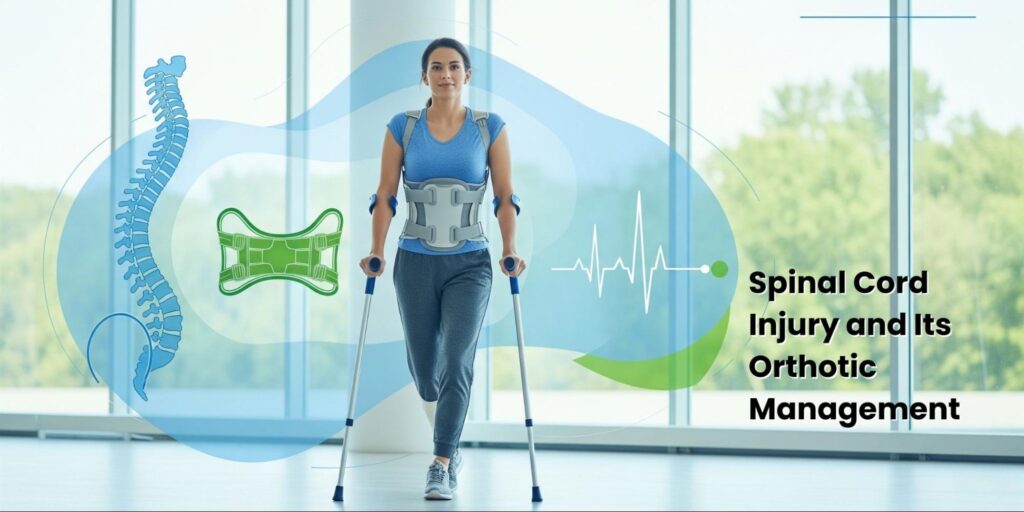
Spinal Cord Injury and Its Orthotic Management Spinal Cord Injury (SCI) is a life-changing condition that affects not only mobility but also independence, daily activities, and overall quality of life. It results from damage to the spinal neural elements, leading to varying degrees of motor and sensory impairment. While medical management focuses on stabilization and prevention of further injury, orthotic management and rehabilitation play an equally critical role in restoring function, preventing complications, and maximizing independence. In this blog, we explore SCI, its assessment, and the vital role of orthotic interventions in upper limb management and rehabilitation. Understanding Spinal Cord Injury (SCI) SCI occurs when the spinal cord is damaged due to trauma or disease, thereby disrupting the communication between the brain and the body. Who is affected? About 80% of SCI cases occur in males, with young adults being most at risk. Leading causes include: Vehicle crashes Falls Violence (such as gunshots) Sports-related injuries Types of injury: Tetraplegia (59%) – paralysis affecting all four limbs and torso Paraplegia (41%) – paralysis of the lower half of the body Rehabilitation Goals: Maximize independence in daily activities Prevent secondary complications such as contractures and pressure sores Improve efficiency and ease of movement Neurological Assessment in SCI An accurate assessment helps clinicians determine the level and extent of injury. Dermatome Each spinal nerve root supplies sensation to a specific skin area. There are: 8 cervical dermatomes (C1 has no dermatome) 12 thoracic 5 lumbar 5 sacral Testing involves pinprick (sharp/blunt) and light touch (cotton wool) to compare sensations on both sides. Myotome Groups of muscles are innervated by a single spinal nerve root. Muscle testing helps identify preserved motor function. This structured neurological evaluation helps clinicians define the level of lesion and plan appropriate orthotic intervention. Orthotic Management in SCI Orthotic devices are designed to support weak muscles, prevent deformities, and restore some degree of functional independence. Their role is especially crucial in upper limb management for individuals with tetraplegia. Upper Extremity Management in Acute Tetraplegia Rehabilitation begins early with splinting and positioning. Goals of splinting: Immobilization and joint protection Prevention of contractures and deformities Pain relief and muscle support Improvement of function in daily tasks Common Splints: Resting hand splint: Wrist at 20° extension, MCP joints slightly flexed Wrist extension splint Tenodesis splint: Uses natural tendon tension to enable grasp (wrist extension leads to passive finger flexion) Additionally, a range of motion (ROM) exercises and proper positioning are critical during early rehabilitation. High Tetraplegia (C1–C4): Orthotic & Assistive Support Patients with high cervical injuries require specialized support. Goals: Prevent deformities Protect insensate areas Reduce edema Maintain hand flexibility Splints: Resting hand splints Opponens splints Wrist extension splints Assistive Technology: Wilmington Robotic Exoskeleton (WREX): Wheelchair-mounted device using elastic elements and power assistance to enable arm movement against gravity Feeding aids: Winsford Feeder – chin-controlled mechanical feeding device Meal Buddy – robotic feeding system with programmable functions and portability Robotic Arms & Neuroprosthetics Modern rehabilitation combines orthotics with robotics to restore independence. JACO Arm (Kinova Robotics): A wheelchair-mounted robotic arm with a 2- or 3-fingered hand, joystick-controlled for intuitive use iARM (Exact Dynamics): Seven-joint robotic arm powered by the wheelchair battery, controlled by joystick or keypad MyoPro Orthosis: FDA-approved robotic arm orthosis that uses surface EMG signals to trigger powered assistance in partially paralyzed arms These innovations empower individuals with tetraplegia to perform daily tasks more independently. Low-Tech Aids for Mid-Cervical Tetraplegia Simple devices remain vital for daily function. Key considerations: Easy to don Lightweight and low-profile Cosmetically acceptable Common orthosis: Resting hand splints Dorsal wrist splints Long & short Opponens splints Universal Cuff (with/without wrist support) enables essential tasks. Other aids: Writing splints, cup holders, and button hooks to promote independence. Functional Electrical Stimulation (FES) & Neuroprosthetics Neuroprosthetics use electrical stimulation to restore hand and arm function. H200 Wireless (Bioness): Commercially available upper limb neuroprosthetics using surface stimulation for grasp and release Freehand System: FDA-approved 8-channel device that restores hand function through FES Bionic Glove: Stimulates finger flexors and extensors, enabling grasp Advanced Systems: ETHZ-Para Care and Stimulus Router Systems provide innovative, though not widely available, solutions for grasp restoration Mobile Arm Supports (MAS) MASs are mechanical devices that assist arm and forearm movement, particularly useful for feeding and table tasks. Examples: Rancho MAS (Golden Arm): Early design for polio patients, later adapted for SCI Feeding aids like Stand Feeder and C-Clamp Feeder By reducing reliance on shoulder and elbow strength, MASs promote independence in daily living. Tenodesis Orthosis (C6–C7 SCI) For patients with partial hand function. C6 Level: Elbow flexion and wrist extension preserved C7 Level: Adds elbow extension Wrist-driven orthosis (tenodesis splint): Uses active wrist extension to create passive finger flexion Enables functional grasp (thumb, index, middle fingers) Critical for restoring independence in self-care activities Dynamic Splints for Hypertonicity In cases of increased muscle tone: Saebo Stretch: Adjustable splint that allows safe stretching during muscle spasms and maintains ROM Dynasplint System: Provides low-load, prolonged stretching at the end range of motion to gradually improve flexibility Low Cervical SCI (C8–T1): Orthotic Goals The main objective is to preserve natural hand function and prevent deformities caused by muscle imbalance. Functional Splints: Prevent intrinsic minus posture and wrist flexion Universal Cuff: Allows patients without grasp to hold utensils or grooming tools The Road Ahead: Innovation in Orthotic Management With advances in robotics, neuroprosthetics, and FES, the future of SCI management is increasingly focused on restoring function rather than merely compensating for loss. Orthotic devices are evolving from static supports into dynamic, intelligent systems that integrate with user intent. The ultimate goal is not only physical rehabilitation but also social reintegration, independence, and improved quality of life. Empowering Lives Through Orthotic Management in Spinal Cord Injury Spinal Cord Injury is a challenging condition, but with the right blend of medical care, orthotic support, and assistive technologies, individuals can regain meaningful function and independence. From traditional splints to cutting-edge robotic arms and neuroprosthetics, orthotic management continues to transform lives by bridging the gap between
What Are 3D-Printed Prosthetics and How Do They Work
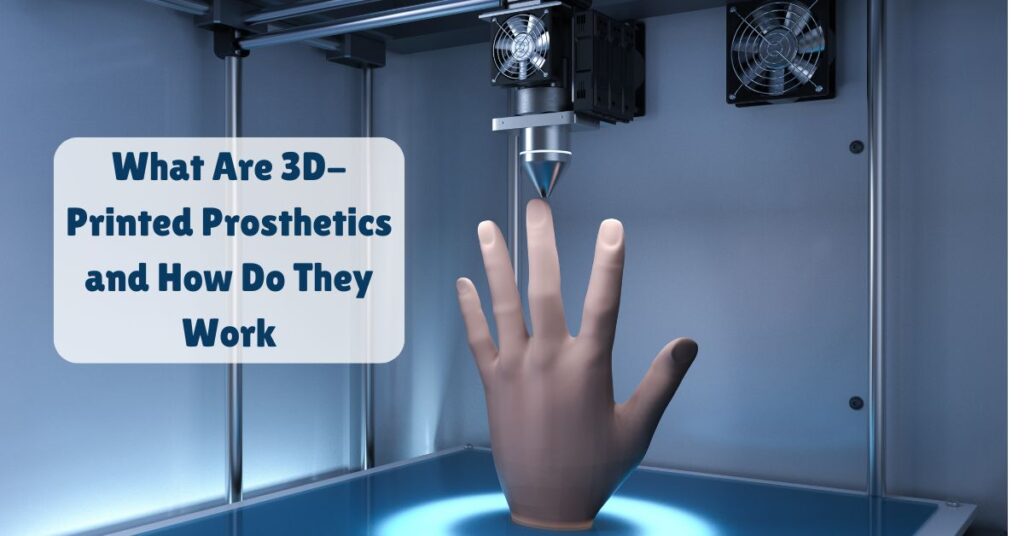
What Are 3D-Printed Prosthetics and How Do They Work Imagine losing a limb and being told that a replacement could cost thousands of dollars and take months to manufacture. Now, imagine an alternative—one where a custom-made prosthetic is designed, printed, and ready to use in just a few days at a fraction of the cost. This is the power of 3D-printed prosthetics. 3D printing technology is transforming the world of prosthetics by making artificial limbs more accessible, affordable, and personalized than ever before. These prosthetics are not just functional; they are designed to fit the unique needs of each user, whether it’s a child who needs a lightweight limb or an athlete looking for high-performance support. But how exactly do 3D-printed prosthetics work, and what makes them different from traditional ones? Let’s dive in and explore the process behind this groundbreaking innovation. The History of 3D-Printed Prosthetics The journey of 3D-printed prosthetics began with early efforts in the 1990s when scientists and medical professionals started experimenting with 3D printing for medical applications. During this period, researchers successfully created 3D-printed dental implants and even began exploring the possibility of printing human organs. However, the idea of using 3D printing for prosthetic limbs was still in its infancy. A major breakthrough came in 2011 when American artist and inventor Ivan Owen played an important role in developing one of the first functional 3D-printed prosthetic hands. Owen initially gained attention for designing a mechanical hand for a steampunk convention, sharing his process in an online video. This caught the interest of a carpenter who had lost his fingers in an accident, leading to a collaborative effort to create a functional mechanical hand. As word spread, a mother of a young boy in need of a prosthetic hand reached out to Owen, hoping for an affordable solution. At that time, traditional prosthetics were expensive and difficult for children, who quickly outgrew them. Realizing the potential of 3D printing, Owen partnered with a 3D printing company to develop a low-cost, scalable prosthetic hand. This marked the creation of one of the first fully functional 3D-printed prosthetic hands, offering an innovative and accessible solution for those in need. The success of this project laid the foundation for further advancements in 3D-printed prosthetics, inspiring organizations and researchers worldwide to develop more sophisticated designs. What Are 3D-Printed Prosthetics? 3D-printed prosthetics are artificial limbs or body parts created using 3D printing technology. Unlike traditional prosthetics, which are often expensive and take weeks or months to manufacture, 3D-printed prosthetics can be produced quickly and at a fraction of the cost. These prosthetics are designed digitally and then printed layer by layer using materials like plastic, resin, or even metal. They can be customized to fit the user perfectly, making them a game-changer for people who need affordable and functional prosthetic limbs. Why 3D Printing for Prosthetics? Affordability – Traditional prosthetics can cost thousands of dollars, while 3D-printed alternatives are much cheaper. Customization – Each prosthetic can be tailored to an individual’s unique anatomy. Speed – Manufacturing is significantly faster compared to conventional prosthetics. Accessibility – 3D printing has enabled prosthetic creation in remote or underserved areas where traditional options may not be available. How Are 3D-Printed Prosthetics Made? Creating a 3D-printed prosthetic involves several key steps: Scanning and Designing: The first step is to gather precise measurements of the affected limb. This is done using: 3D scanning technology Traditional casting techniques (for reference measurements) Once the measurements are collected, a digital model of the prosthetic is designed using Computer-Aided Design (CAD) software. The design ensures the prosthetic fits comfortably and meets the user's specific needs. Material for 3D Printed Prosthetics: The material chosen for the prosthetic depends on its purpose and function. Some commonly used materials include: PLA (Polylactic Acid) – Lightweight and biodegradable, commonly used for non-weight-bearing prosthetics. ABS (Acrylonitrile Butadiene Styrene) – Durable and strong, suitable for functional prosthetics. Resins – Used for high-precision, detailed parts. Metals (Titanium, Aluminum, or Stainless Steel) – Used for stronger, more durable prosthetics. 3D Printing the Prosthetic Once the design is finalized, it is sent to a 3D printer. The printer creates the prosthetic layer by layer using additive manufacturing techniques. Depending on the complexity, printing can take anywhere from a few hours to a couple of days. Post-Processing and Assembly After printing, the prosthetic goes through post-processing steps, including: Smoothing rough edges Assembling different components (if necessary) Adding soft padding for comfort Painting or coating for durability Fitting and Adjustments The prosthetic is then fitted to the user. Adjustments may be needed to ensure a perfect fit. Occupational or physical therapists may help the individual adapt to their new prosthetic. Types of 3D-Printed Prosthetics Arm and Hand Prosthetics 3D-printed arms and hands can be customized with different grip functionalities. Some models use cables and elastic bands for movement, while advanced versions include electronic sensors for better control. Leg and Foot Prosthetics While 3D-printed leg prosthetics are not as common due to strength limitations, lightweight versions are available for below-the-knee amputees. They can be reinforced with metal for added durability. Partial Prosthetics For individuals who have lost fingers or toes, partial 3D-printed prosthetics offer improved functionality and aesthetic appeal. Prosthetics for Children Children outgrow prosthetics quickly, making 3D-printed options a cost-effective and practical solution. These prosthetics are designed to be easily replaceable and adjustable. What are the Advantages of 3D-Printed Prosthetics? Cost-Effective – A more affordable alternative to traditional prosthetics, making them accessible to a larger population. Customizable – Each prosthetic can be tailored to fit the specific needs, preferences, and anatomy of the user. Lightweight and Comfortable – Designed using lightweight materials, making them easier to wear for extended periods. Faster Production – Significantly reduces the time required to manufacture and deliver a prosthetic compared to conventional methods. Innovative Designs – Allows for creative, ergonomic, and aesthetically appealing designs that are not possible with traditional manufacturing. Scalability for Growing Children – Easily adjustable or replaceable prosthetics that can be modified