Summary
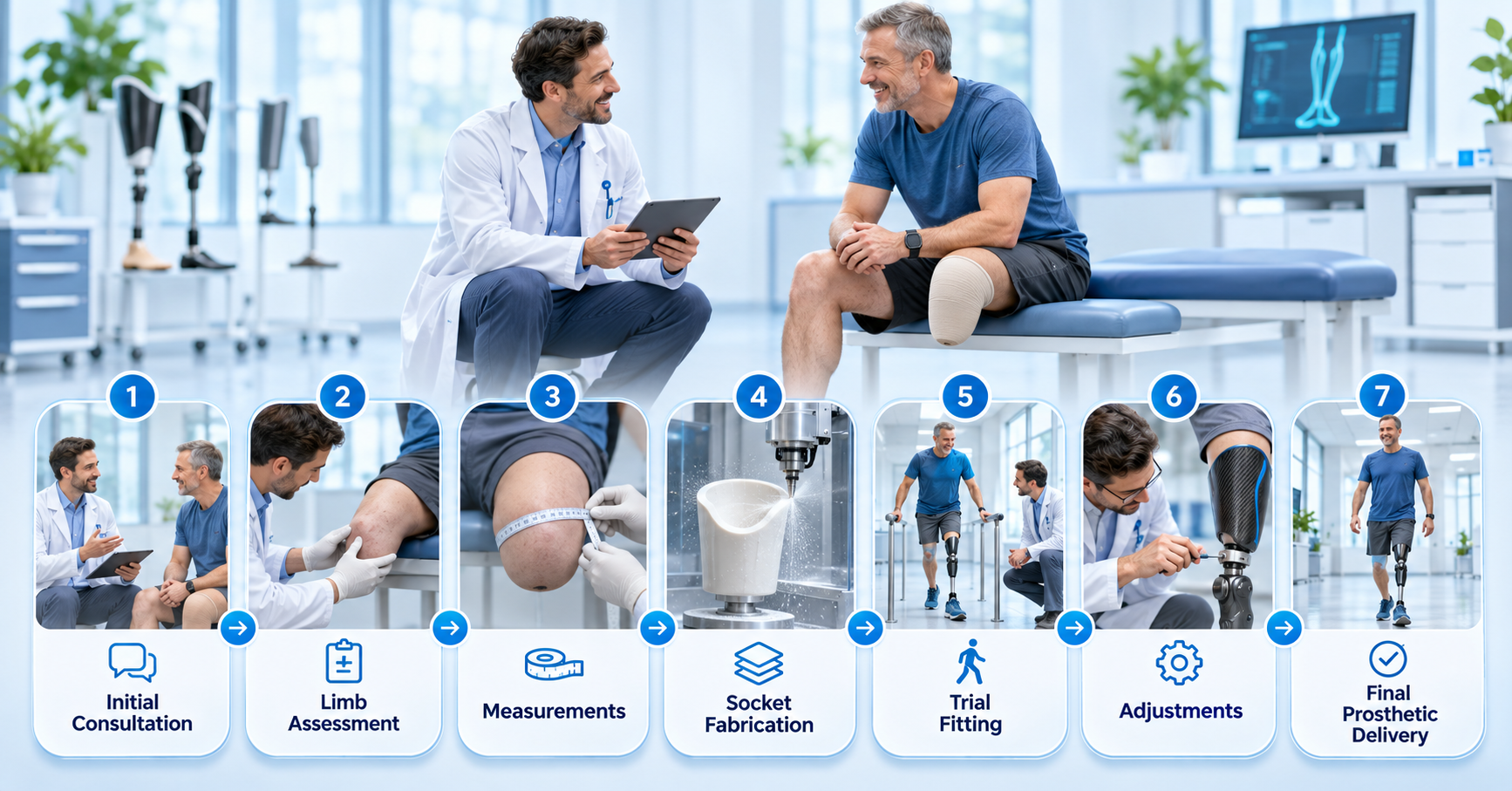
| The number of visits needed to get an artificial leg varies with healing, amputation level, socket complexity and component choice. Many fittings involve an initial assessment, measurements or casting, a diagnostic test-socket visit, dynamic alignment, final fitting and follow-up. Straightforward cases may move faster, while complex sockets or advanced knees require additional trials and training. |
Getting an artificial leg is not the same as buying a standard-sized product. The socket must be made around the residual limb, components must be aligned under the body, and the user has to learn how to load and control the system. For that reason, several visits are normal. A clinic promising a finished prosthesis without adequate assessment or follow-up may be skipping steps that affect long-term comfort.
Visit 1: Initial Consultation and Goal Setting
The first visit reviews amputation level, wound healing, residual-limb shape, skin, range of motion, strength, balance, medical history, current mobility, work and lifestyle. The prosthetist discusses realistic goals and explains component options.
This is also when you should discuss budget, expected timeline, maintenance and what the quote includes. Protech Ortho provides custom AK and BK prosthetic services for both transtibial and transfemoral users.
Visit 2: Measurements, Casting or Scanning
Once the limb is ready, the prosthetist records detailed measurements and may cast or scan the residual limb. Liner sizing and suspension planning happen at this stage. The design must protect sensitive areas while providing control.
If a silicone liner is planned, sizing should follow the manufacturer’s method. Protech Ortho lists multiple liner options for locking and cushion suspension.
Visit 3: Diagnostic Test Socket
A test socket is a temporary or diagnostic socket used to evaluate fit before the definitive socket is completed. The prosthetist checks pressure, total contact, suspension, trim lines and comfort while the user stands and begins to walk.
Adjustments are expected. Needing changes at this stage is not a failure; it is the reason the test socket exists.
Visit 4: Static and Dynamic Alignment
Static alignment is checked while standing. Dynamic alignment is refined while walking. The prosthetist adjusts the relationship between socket, knee, pylon and foot so the forces support stability and efficient gait.
Above-knee users may also need knee resistance settings adjusted. Mechanical, pneumatic and hydraulic prosthetic knees respond differently, so advanced systems can require more tuning.
Visit 5: Final Socket and Delivery
After the diagnostic fit is accepted, the definitive socket is fabricated and assembled with the selected components. The final fitting repeats comfort and alignment checks because material and shape changes can slightly affect the feel.
The user receives instructions for donning, doffing, liner care, sock management, component checks and gradual wear time.
Visit 6 and Beyond: Gait Training and Follow-Up
Follow-up is part of the fitting, not an optional extra. The residual limb can change after the user begins walking more. Small pressure or alignment issues may only appear after several hours of real-world use.
Protech Ortho’s clinical gait analysis and rehabilitation supports post-fitting weight transfer, balance and walking technique.
Can an Artificial Leg Be Fitted in One Visit?
Some socket systems and straightforward cases can be fabricated very quickly, and modern direct-socket technologies can sometimes reduce appointments. However, a one-visit fabrication still requires appropriate assessment and follow-up. Faster does not automatically mean better if comfort and gait are not verified.
Why Above-Knee Fittings Often Need More Time
An above-knee prosthesis adds knee selection, knee alignment and swing/stance tuning. The user may need more gait training, especially when moving from a basic knee to pneumatic, hydraulic or microprocessor technology.
Why a New Amputee May Need More Visits
Residual-limb volume changes rapidly in the early months after amputation. A first prosthesis may need more sock management, socket adjustments or even an earlier replacement socket. Rehabilitation is also teaching skills for the first time.
Why an Experienced User May Need Fewer Visits
A mature residual limb and known component preferences can make replacement fitting more predictable. Even so, every new socket should be tested because the body and activity level may have changed since the previous device.
What Can Delay the Timeline?
Delays can come from incomplete wound healing, swelling, skin problems, contracture, medical issues, component availability, major socket adjustments or waiting for an advanced imported part. Rushing before the limb is clinically ready can create a poor result.
What Should You Bring to Each Visit?
Bring the footwear you plan to use, your current prosthesis if you have one, walking aids, relevant medical records and a list of daily activities. For follow-up, bring notes or photos showing pressure areas and describe when problems occur.
Ask the Clinic What “Delivery” Really Includes
A complete fitting plan should state whether the price includes test socket, definitive socket, liner, foot, knee, adapters, gait training, follow-up adjustments and warranty. Protech Ortho’s product range lets you identify the components that may be part of your final configuration.
A Typical Fitting Journey in Real Life
A straightforward below-knee replacement may move from assessment to measurement, test socket, alignment and delivery with relatively few appointments. A first above-knee prosthesis may need additional sessions because the user is learning suspension, knee control and gait at the same time. A complex residual limb may require several diagnostic socket revisions. The number of visits is therefore a quality variable, not a target to minimize at any cost.
Questions to Ask About the Timeline Before You Start
Ask how soon the first measurement can be taken, how long fabrication normally takes, how many test-socket appointments are included, whether components are in stock, what happens if the test socket needs to be remade and how follow-up is scheduled. If you are travelling from another city, ask whether multiple steps can safely be combined into longer appointments without compromising fitting quality.
Plan for the Period After Delivery
The day you receive the prosthesis is not the end of the process. New users often need gradual increases in wear time, gait training and early adjustments. Keep enough flexibility in work and travel plans for follow-up. If the residual limb is still changing quickly, ask the clinic how socket changes will be handled and whether future refitting is included or separately charged.
How to Reduce Unnecessary Visits Without Rushing
You can make appointments more efficient by bringing the right shoes, records, current components and a clear list of goals. Respond quickly when the clinic asks for a skin check or test-socket feedback, and avoid changing sock combinations or footwear immediately before an alignment appointment unless instructed. For out-of-town users, clinics can sometimes combine measurement and consultation or schedule longer trial sessions, but the diagnostic steps should not be skipped merely to reduce travel.
A Good Fitting Timeline Uses Enough Visits to Get the Fit Right
There is no ideal number of visits that applies to everyone. The right timeline gives the prosthetist enough opportunities to assess, test, align and follow up without unnecessary delay. For a personalized estimate, contact Protech Ortho with your amputation level, healing status and current mobility goals.
Frequently Asked Questions
How many visits does a prosthetic leg usually take?
Often several visits are needed: assessment, measurement, test socket, alignment, final delivery and follow-up. Exact numbers vary.
How long after amputation can I get a prosthetic leg?
It depends on wound healing, swelling, medical stability, strength and clinical readiness rather than a fixed number of weeks.
What is a test socket?
It is a diagnostic socket used to evaluate fit and alignment before the definitive socket is fabricated.
Can a leg be made in one day?
Some systems can be fabricated quickly, but proper assessment and follow-up remain necessary.
Why do I need follow-up after delivery?
Real-world walking reveals fit and alignment issues that may not appear during a short clinic session.
Do above-knee legs take more visits?
They often can because knee selection and tuning add complexity.
Will I need physiotherapy?
Many users benefit from gait training, balance and strengthening after fitting.
What if my stump changes size during fitting?
The socket may need adjustment or the fitting timeline may be modified until volume is manageable.
Should I bring my usual shoes?
Yes. Shoe heel height and sole affect prosthetic alignment.
Where can I start the fitting process?
Book a consultation through Protech Ortho clinical services or the contact page.
Medical & Fitting Note
This article is general educational and buying guidance. Prosthetic components, sockets and suspension systems must be selected and fitted by qualified prosthetic professionals based on individual clinical assessment. Prices and product availability can change; request a current quote before purchase.