
Summary
| A prosthetic leg should be upgraded when your current system no longer matches your body, activity level, comfort or safety—not simply because a newer component exists. Socket fit and liner condition should be checked first, then the foot or knee can be upgraded if your mobility goals have changed and the rest of the system is compatible. |
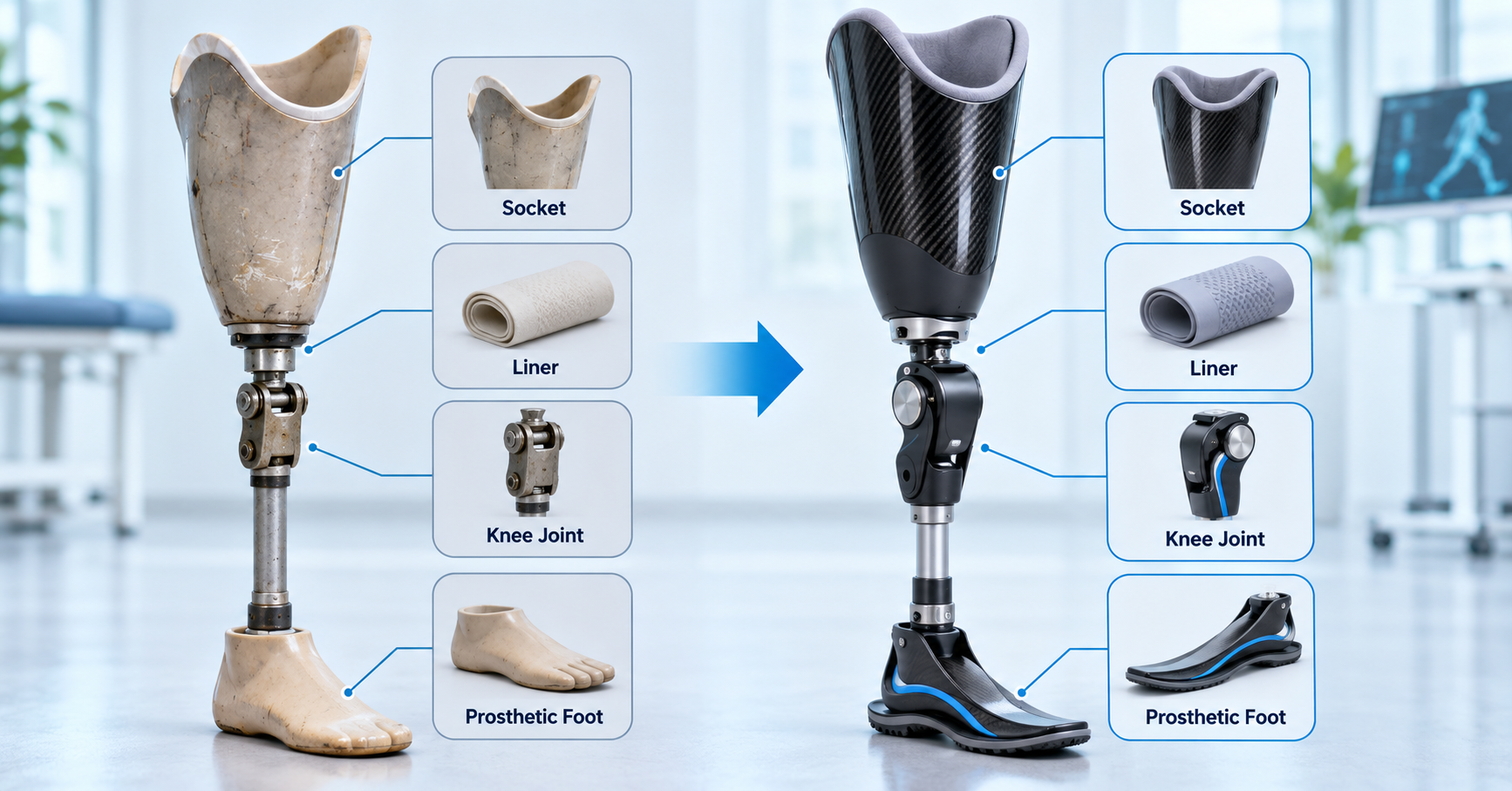
Prosthetic technology evolves quickly, and it is natural to wonder whether a carbon foot, hydraulic knee or new liner will make walking easier. Sometimes an upgrade creates a meaningful improvement. In other cases, the real problem is a loose socket, poor alignment or worn suspension. The smartest upgrade process identifies the limiting factor before spending money on a new component.
Upgrade the Socket When the Body Has Changed
The socket should be the first item reviewed because it determines control of every component below it. Major weight change, residual-limb volume loss, pain, recurring skin damage, rotation or excessive pistoning can indicate that the socket needs replacement rather than another component upgrade.
Protech Ortho’s custom socket fitting service can evaluate whether pads, a liner change or a new socket is the most appropriate solution.
Upgrade the Liner When Cushioning or Suspension Declines
Liners wear with daily use. Replace or upgrade when the material becomes thin, stretched, cracked, torn or no longer maintains suspension. You may also need a different liner if your skin condition, limb shape or suspension method changes.
A move from a locking liner to a cushion or vacuum-based system—or the reverse—should be planned with the socket design. Compare Protech Ortho locking and cushion liners as part of a complete suspension strategy.
Upgrade the Foot When Your Activity Has Outgrown It
A user who begins with a SACH foot may later become a stronger community walker. If you now walk longer distances, change speed frequently, use uneven terrain or want a more responsive rollover, a single-axis or carbon dynamic-response foot may provide a functional benefit.
Protech Ortho’s prosthetic foot range includes SACH, single-axis and carbon-oriented options. The prosthetist should check body weight, foot stiffness, build height, footwear and alignment before changing the foot.
Upgrade the Knee When Control Needs Have Changed
Above-knee users may consider upgrading from a manual-locking or basic friction knee to a load-activated, pneumatic, hydraulic or microprocessor system when balance, strength and activity improve. A more advanced knee can offer smoother swing, better variable-cadence control or adaptive stability.
However, an advanced prosthetic knee joint can be heavier, more expensive and more demanding to service. Upgrade only when the expected functional gain justifies those trade-offs.
Upgrade Because of Activity Change, Not Only Component Age
Component age matters, but function matters more. A knee or foot can sometimes be replaced sooner if your activity level increases significantly or if the component fails. Conversely, a well-maintained component does not need replacement merely because a newer model is available.
Signs Your Current Foot Is Limiting You
Look for difficulty increasing walking speed, harsh rollover, instability on terrain, fatigue that is clearly linked to foot behaviour, or a mismatch between your current activity and the foot category. These signs need gait assessment because similar symptoms can also come from socket or alignment problems.
Signs Your Knee Is Limiting You
Common concerns include inability to comfortably vary cadence, repeated instability, excessive compensatory hip movement, poor toe clearance or difficulty with slopes. A knee tune-up or alignment change may solve the problem without replacement, so testing is important.
Compatibility Can Decide Whether an Upgrade Is Practical
A new component must fit within the available build height and connect to the existing adapters. It must also match body-weight limits and activity classification. Sometimes an apparently simple foot upgrade requires changes to the pylon or alignment.
Consider Total Cost, Not Only Component Price
An upgrade cost can include the new component, adapter changes, socket modification, new liner, alignment, gait training and future maintenance. Microprocessor systems add chargers and specialist service. Ask for a complete quote before deciding.
Trial the Upgrade Whenever Possible
Walking with a trial component can reveal whether the improvement is real. Compare comfort, stability, speed, effort and confidence rather than relying on marketing claims. The goal is measurable benefit in your daily life.
Do Not Upgrade Around an Uncomfortable Socket
If the socket is painful or unstable, fix that first. A carbon foot or hydraulic knee cannot perform properly when the user is avoiding pressure or cannot control the limb. Interface problems should be resolved before performance upgrades.
Build an Upgrade Plan With Your Prosthetist
Tell the clinician what has changed: new job, longer commute, more exercise, weight change, different terrain or repeated component problems. That helps determine whether the most valuable upgrade is the socket, liner, foot, knee or simply alignment and training.
How to Prioritize Upgrades When Budget Is Limited
Spend first on the problem that affects safety and wear time. A painful loose socket usually deserves attention before a premium foot. A torn liner should be replaced before changing the knee. Once the interface is stable, upgrades that reduce fatigue, improve terrain performance or increase cadence can be evaluated more fairly. This order prevents expensive components from being installed on a system the user still cannot comfortably wear.
Set a Measurable Goal for Every Upgrade
Define what success looks like before buying: walk one kilometre with less fatigue, safely manage a workplace ramp, reduce falls, vary cadence in crowds or wear the prosthesis for a full workday. After the trial, compare the new component against that goal. If the improvement is only cosmetic or difficult to notice, the upgrade may not justify the cost.
Upgrade Planning for Above-Knee Users
When both the knee and foot could be upgraded, changing one component at a time can make it easier to judge the benefit, but sometimes the two must be planned together for compatibility and alignment. Discuss build height, total weight and maintenance before choosing a more advanced knee. A lighter foot can sometimes offset the added mass of a complex knee, but the gait effect must be tested.
Upgrade vs Replace the Entire Prosthesis
Most modular prostheses do not need to be replaced as one unit every time a component changes. If the socket fits well and the structural system is compatible, a worn liner, foot or knee may be replaced individually. A full rebuild becomes more likely when the socket is also failing, several components are near the end of service life or the new technology requires different build height and adapters. Comparing these two paths can prevent unnecessary spending while still improving function.
Upgrade the Component That Is Actually Limiting Your Mobility
The best prosthetic upgrade is targeted, not automatic. Start with socket fit, inspect the liner and suspension, then test whether a foot or knee change creates a meaningful improvement. Protech Ortho’s prosthetic products and clinical services make it possible to compare upgrade paths as one integrated system rather than buying parts in isolation.
Frequently Asked Questions
When should I upgrade my prosthetic foot?
Consider it when your activity increases, the current foot limits speed or terrain, or the component is worn or damaged.
When should I upgrade my knee?
When stability or swing control no longer matches your mobility and a clinical trial shows benefit from another knee.
Is a new socket an upgrade?
Yes. Better fit can produce a larger improvement than changing a high-tech component.
How often should a liner be upgraded?
Replace it when worn or poorly fitting; change type only when suspension or clinical needs justify it.
Can I upgrade one component at a time?
Often yes in modular systems, but every change requires compatibility and alignment checks.
Is a carbon foot always an upgrade?
Only if its dynamic characteristics match your weight, activity and goals.
Is a hydraulic knee always better than mechanical?
No. It offers different control and complexity; the right system depends on the user.
Can an upgrade reduce pain?
If pain is caused by a worn or mismatched component it may help, but socket fit and medical causes must be assessed first.
Should I upgrade before my old component breaks?
Potentially, if performance or safety has become inadequate. Do not wait for catastrophic failure when wear is evident.
Where can I plan an upgrade?
Use Protech Ortho’s clinical fitting and gait services to assess the whole system.
Medical & Fitting Note
This article is general educational and buying guidance. Prosthetic components, sockets and suspension systems must be selected and fitted by qualified prosthetic professionals based on individual clinical assessment. Prices and product availability can change; request a current quote before purchase.