Summary
| Prosthetic discomfort can come from socket fit, residual-limb volume change, worn liners, perspiration, pistoning, poor suspension, alignment, footwear or component problems. Persistent pain, blisters, numbness, skin breakdown or sudden instability should be assessed by a prosthetist rather than accepted as normal. |
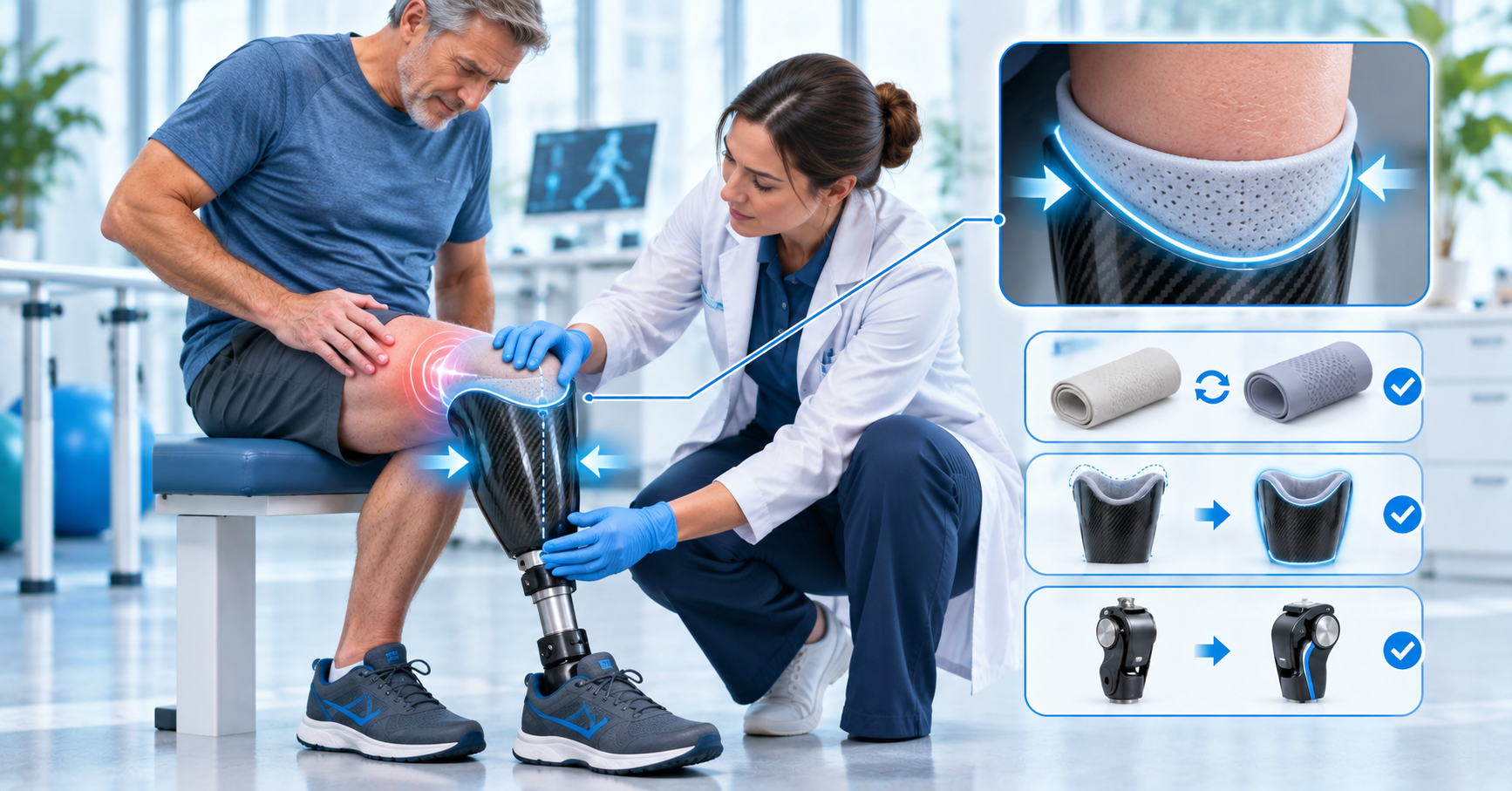
A prosthetic leg can feel different throughout the day, especially as residual-limb volume changes, but persistent pain is a warning sign. The difficult part is that the source is not always where the user feels it. A painful socket area may be caused by alignment, a worn liner or foot mechanics. A “heavy” or unstable leg may actually be pistoning inside an oversized socket. This guide helps separate common causes so you know what to discuss at a refit appointment.
Socket Too Loose: Pistoning and Rotation
When the residual limb moves up and down inside the socket, the skin can be pulled and rubbed. The leg may feel heavy because the user is lifting the prosthesis through soft tissue rather than controlling it securely. Rotation can also turn the foot inward or outward during walking.
Small volume changes may be managed with prosthetic socks or pads. Persistent pistoning usually needs a fit review through custom socket services.
Socket Too Tight: Pressure and Numbness
Swelling, weight gain or an incorrectly managed sock combination can make the socket too tight. Signs include difficulty donning, concentrated pressure, numbness, throbbing or skin marks that persist after removal.
Do not simply “wear through” the discomfort. Excess pressure can damage skin and may affect circulation. The prosthetist may adjust relief areas, socket volume or suspension.
Liner Wear Can Change the Entire Fit
A liner that has stretched or thinned no longer provides the same cushioning or volume. Tears and surface damage can increase friction. If the liner is part of the suspension system, wear can also increase pistoning.
Inspect your liner daily and compare it with the condition of a new one. Protech Ortho’s silicone liner range includes locking and cushion options, but any replacement must match the socket.
Sweat, Heat and Skin Friction
Perspiration creates moisture between skin and liner, which can increase friction and cause rash or abrasions. Remove the prosthesis when needed, dry the skin and liner, and follow the liner manufacturer’s cleaning instructions. Do not wear a wet liner.
Alignment Problems Can Feel Like Socket Problems
If the foot is too far forward, backward, inward or outward relative to the socket, forces can become concentrated in painful areas. Knee and foot settings can also alter loading. A user may compensate by leaning, vaulting or taking uneven steps.
Dynamic alignment during walking is essential after socket changes or component upgrades. Protech Ortho includes gait analysis and rehabilitation in its clinical service offering.
The Prosthetic Foot May Be Too Stiff or Worn
A foot that is too stiff for the user can create harsh loading and make rollover difficult. A worn heel or damaged foot can change stability. Changing footwear heel height can also disturb alignment even when the foot itself is undamaged.
Compare foot condition and activity suitability using the Protech Ortho prosthetic feet range.
Above-Knee Users: Knee Settings Matter
A knee with too much or too little swing resistance can force compensatory movement. Unexpected stance behaviour can make the user walk cautiously and overload the socket. Hydraulic, pneumatic and mechanical knees all require correct setup.
If the knee suddenly behaves differently, makes unusual noise or leaks, stop and arrange inspection. See the prosthetic knee joint range for the types of systems that require different maintenance.
Residual-Limb and Medical Pain Are Different
Not every pain is mechanical. Neuroma, phantom pain, infection, vascular problems, bone changes and skin conditions require medical evaluation. A prosthetist can identify fit-related patterns but may refer you to a doctor when the symptoms suggest a medical cause.
When a Socket Refit Is Enough
Minor volume changes, localized pressure and suspension issues can sometimes be corrected through padding, relief, alignment or liner changes. A diagnostic review may restore comfort without a new socket.
When You May Need a New Socket
A new socket becomes more likely when weight or limb volume has changed significantly, skin breakdown recurs, large amounts of sock ply are required, rotation cannot be controlled or modifications no longer restore comfort.
When You May Need New Components
Replace or upgrade components when they are worn, damaged, no longer safe, or no longer match your activity level. Do not assume every discomfort requires a more advanced foot or knee; fix the interface and alignment first.
Bring Useful Information to the Appointment
Note when the discomfort occurs, where it is located, what footwear you were using, how many hours you had worn the prosthesis and whether the skin shows a mark. Photos of redness immediately after removal can help the clinician identify patterns.
A Simple Troubleshooting Sequence Before You Buy New Parts
First inspect the skin and note the exact location of discomfort. Second, check whether the liner is clean, correctly donned and undamaged. Third, review sock ply and suspension. Fourth, consider whether you changed shoes or activity. Finally, have the prosthetist check socket fit and dynamic alignment. Only after these steps should you assume the foot or knee needs replacement. This sequence prevents unnecessary spending.
Common Discomfort Patterns and What They Can Suggest
Distal pulling may point toward suspension or pistoning. Pressure at a socket edge may reflect trim-line or volume issues. A feeling of dropping too quickly over the toe may involve foot stiffness or alignment. Hip hiking and poor toe clearance may involve knee swing control or prosthetic length. These patterns are clues, not diagnoses, and should be confirmed during gait assessment.
When to Seek Urgent Medical Rather Than Prosthetic Help
Seek medical care for spreading redness, drainage, fever, severe swelling, sudden unexplained pain, suspected infection, new circulation changes or an injury after a fall. A prosthetist can modify mechanical fit, but medical conditions need medical assessment. If you have diabetes or vascular disease, skin changes deserve particularly prompt attention.
Comfort Changes During the Day
Residual-limb volume can change from morning to evening. Some users start the day with a snug fit and need additional sock ply later; others experience swelling and increasing tightness. Keep a simple record of sock use and discomfort timing for a week. Patterns help the prosthetist distinguish daily volume management from a socket that is fundamentally the wrong size. This information is especially valuable when symptoms are intermittent and the socket feels acceptable during a short clinic appointment.
Discomfort Is a Signal to Find the Cause, Not Something to Endure
A comfortable prosthesis depends on the body, socket, liner, alignment and components working together. Persistent discomfort deserves a structured assessment, starting with skin and socket fit before moving to component replacement. A review through Protech Ortho clinical services can identify whether you need a small adjustment, socket refit, liner replacement or component change.
Frequently Asked Questions
Is prosthetic leg pain normal?
Mild adaptation sensations can occur, but persistent pain, skin injury or numbness should not be accepted as normal.
Why does my leg feel loose later in the day?
Residual-limb volume can decrease, creating space and pistoning.
Can I add more socks for a loose socket?
Yes when instructed, but steadily increasing sock ply may indicate the socket needs review.
Why does my socket hurt behind the knee?
It may be trim-line pressure, socket fit, alignment or sitting position; a prosthetist should assess it.
Can a worn liner cause blisters?
Yes. Reduced cushioning and friction control can contribute to skin problems.
Why does my prosthetic foot turn out?
Socket rotation or alignment may be responsible. Do not rotate adapters yourself.
Can new shoes make the leg uncomfortable?
Yes. Different heel height can alter prosthetic alignment.
How do I know if the knee is causing the problem?
Changes in swing, buckling, resistance or noise should be assessed alongside socket and alignment.
When should I stop wearing the prosthesis?
Stop and seek advice for open wounds, severe pain, sudden instability or suspected component damage.
Where can I get a refit?
Protech Ortho provides socket fitting and gait assessment.
Medical & Fitting Note
This article is general educational and buying guidance. Prosthetic components, sockets and suspension systems must be selected and fitted by qualified prosthetic professionals based on individual clinical assessment. Prices and product availability can change; request a current quote before purchase.